If you’ve ever had a practitioner press on a tender spot in your neck or shoulder and say, “you’ve got a knot there”, you’re not alone. It’s one of the most common things people mention in our clinic, and one of the most misunderstood. So what is a muscle knot, and does the science back up what we’ve been told?
What do people mean by a muscle “knot”
A muscle “knot” usually describes a tight, tender spot in a muscle. They’re most common in the upper traps, upper back, neck and glutes. Pressing on one can feel sore/relieving, and occasionally the ache spreads somewhere else. In clinical terms, these spots are often called myofascial trigger points.
What are Myofascial Trigger Points?
The trigger point concept was popularised in the 1980s and 1990s by two doctors, Janet Travell and David Simons. They described a hyperirritable spot in a tight band of muscle that causes local tenderness and pain felt elsewhere in the body. Their explanation was that part of the muscle stays contracted and runs short of energy. The idea became widely used in physiotherapy, massage, chiropractic and sports medicine, largely because it matched what patients and practitioners were constantly observing.
Are muscle knots actually knots?
Not in the way the word suggests, muscles don’t literally tie themselves into knots. Research hasn’t found one consistent structural change that explains these spots, and practitioners don’t always agree on where they are when they feel for them. So the tenderness is real, but “knot” describes how it feels, not what’s happening in the tissue.
What’s actually going on
Current research suggests that there are several causes:
- An overloaded muscle: A muscle that’s worked hard, held in one position or kept under tension can become more sensitive to pressure. This can come from long hours at a desk, a big leap in training, carrying a baby for prolonged time, or doing the same thing repeatedly with little variety.
- A sensitive nervous system: Pain isn’t just a reading from the tissue. Your nervous system decides how much to “turn up” the signal. When it’s on high alert, ordinary pressure can feel painful, and the area becomes more reactive.
- Stress, sleep and general load: Poor sleep, stress and being run down are consistently linked with more muscle tension and pain sensitivity. That’s why a spot can flare during a stressful week even if your posture hasn’t changed.
Put together, a knot is best understood as a sensitive, overworked area of muscle, not damaged tissue that needs to be broken up.
Why do muscle knots cause referred pain?
Many people notice that pressing on a tight spot in the shoulder sends an ache into the neck or head, or that a glute spot refers pain down the leg. This “referred pain” is thought to come from how the spinal cord processes signals, with inputs from different areas converging. It doesn’t mean a nerve is trapped or damaged, though it’s worth getting assessed if you also have numbness, tingling or weakness.
How to relieve muscle knots
- Move regularly: changing position often helps more than holding one “perfect” posture. Short movement breaks, a walk or a few stretches through the day all count!
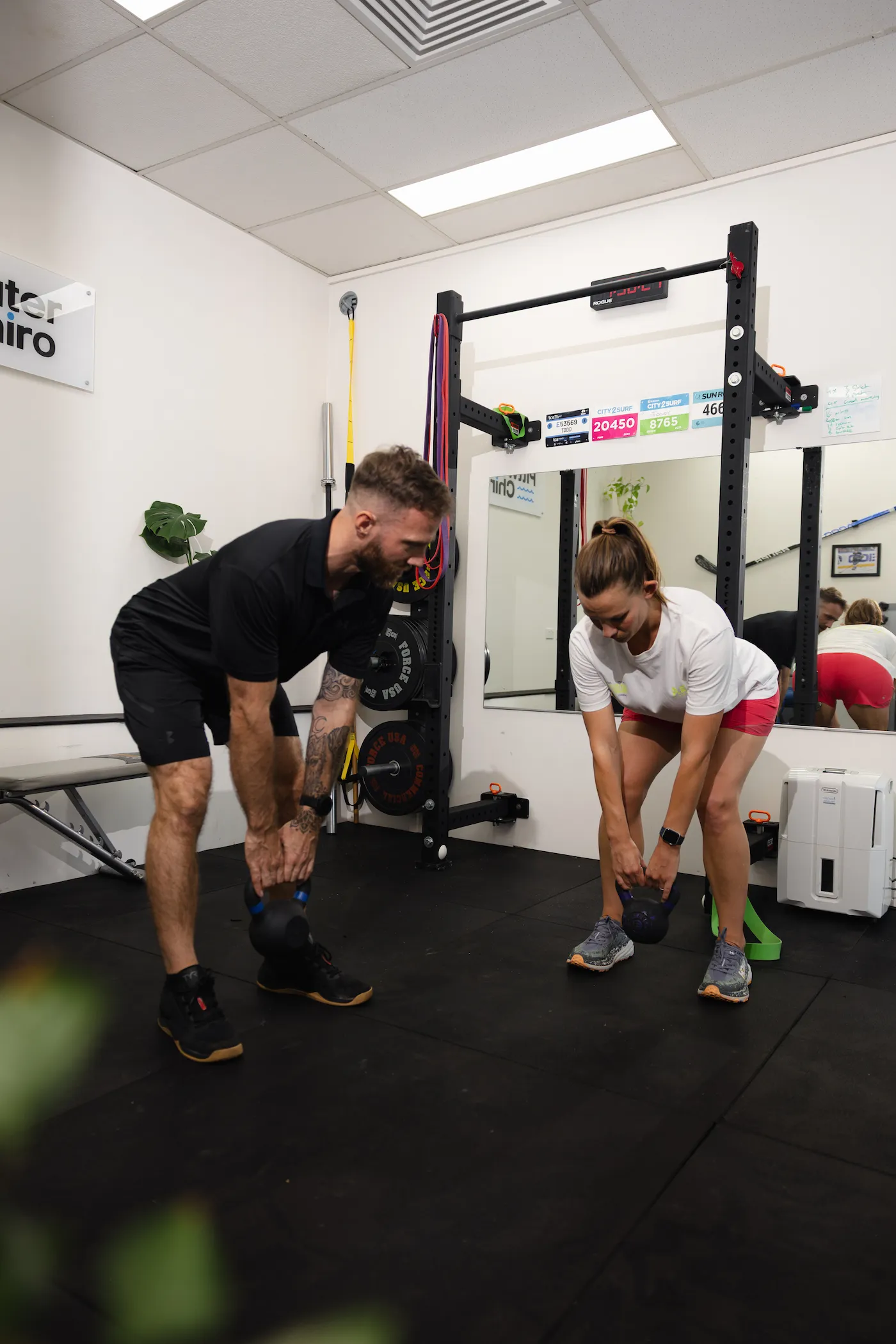
- Build strength gradually: exercise is one of the best supported treatments for ongoing muscle pain. Stronger muscles tolerate load better, so they’re less likely to become overworked.
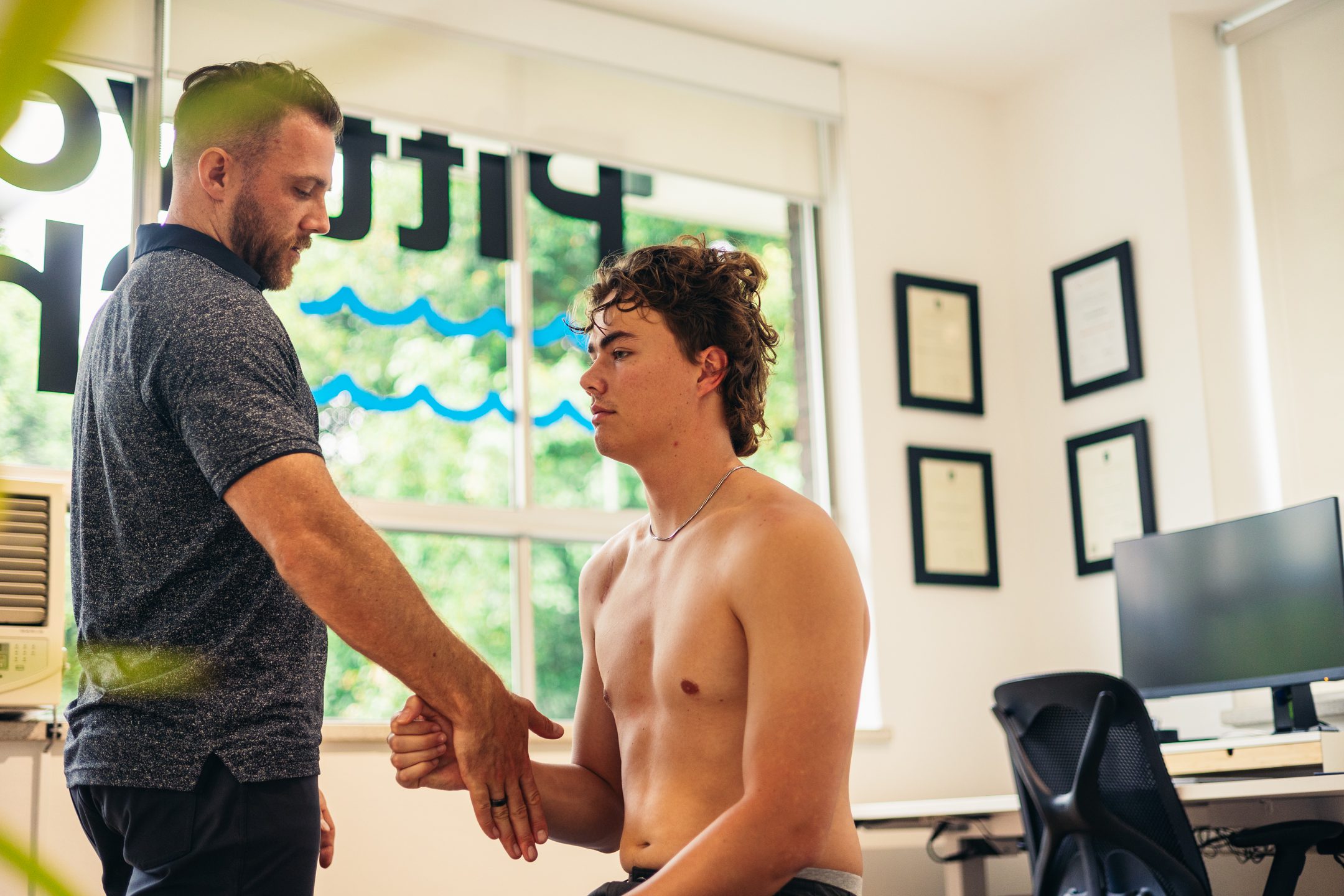
- Manual therapy: soft tissue work and dry needling can reduce tenderness and ease pain. The evidence is mixed, and the effects are thought to involve the nervous system more than “breaking up” tissue. They tend to work best by settling things down so you can move and exercise more comfortably.
- Use heat and gentle self-massage: a heat pack, a warm shower, or light pressure with a massage ball can provide short-term relief. Firm but comfortable pressure is plenty.
- Look after the basics: sleep, stress management and regular activity all affect how sensitive your muscles feel!
Common misunderstandings about muscle knots
- “I need to dig in hard to release it.”
- You don’t. Very aggressive pressure can leave the area more irritable.
- “Knots are always caused by bad posture.”
- Posture can contribute, but stress, sleep, training load and overall activity matter too.
- “If it comes back, the treatment didn’t work.”
- Not necessarily. A knot returning usually means something is still loading or sensitising the area, and the real fix is often figuring out what.
When should you get a muscle knot assessed?
Book in for a consult if your pain is persistent, getting worse or spreading, or if you notice numbness, weakness, or headaches that are new or different. Not every tight spot is a muscle knot, and joint and nerve problems can feel similar.
A muscle knot isn’t a sign that something is broken. It’s a sensitive, overworked area of muscle, shaped by how much load you’re under and how your nervous system is responding. It usually settles with the right mix of movement, strength and self care, and we can help you work out which of those matters most for you.
Experiencing persistent muscle tension or recurring muscle knots? At Pittwater Chiro, our chiropractors in Mona Vale and Balgowlah can help assess your symptoms and develop an individualised approach to managing your pain and improving movement. Book online at www.pittwaterchiro.com/contact.