“Strengthen your core” is advice we hear everywhere, but why is core strength important, and what does having a strong core actually mean?
Core strength is often associated with visible abdominal muscles or being able to hold a plank for a long time. In reality, your core plays a much broader role. The muscles of your trunk help create stability around the spine and pelvis, allowing your body to control movement, transfer force, and respond to the physical demands of everyday life, exercise and sport.
What is your core and what does it do?
Your core is not just your abs. It is a group of muscles that work together, connecting your pelvis to your lower ribs like a muscular cylinder. It includes your abdominal muscles, diaphragm, quadratus lumborum, erector spinae, pelvic floor and other smaller muscles surrounding your spine and pelvis.
These muscles work together to control the position and movement of the trunk, particularly when the arms and legs are moving. When you pick up a heavy object, your arms and legs do most of the work. The core muscles, however, must maintain the stability of the torso to transfer the force. This is one of the main functions of the core.
Core strength and spinal stability
The spine is designed to move. Spinal stability does not mean keeping your spine completely still or maintaining one “perfect” posture. Instead, stability is the ability to control movement and resist unwanted movement when a force is applied.
Your spine is supported by passive structures such as bones, joints, discs, and ligaments, as well as active muscular support and the nervous system. Your muscles don’t simply switch on to “hold your spine in place”. They constantly adjust their activity depending on what you are doing.
For example, carrying a heavy bag on your left side creates a force that could pull your trunk towards the bag. Your nervous system responds by activating the muscles on the right side of your body to contract, maintaining a straight spine.
The same principle applies when you run, jump, lift, reach or rotate. Good core function therefore isn’t about being rigid. It is about being able to control movement while still allowing movement to occur.
Why is core strength important?
A strong and well-coordinated core can help you:
- Transfer force effectively: When you lift, push, pull, throw or carry something, force needs to travel through your body. Your trunk provides the link between your upper and lower body to transfer the force.
- Control spinal movement: Your core muscles help control excessive movement of your spine when you are exposed to external forces. For example, if you catch a medicine ball from the side and you didn’t have core muscles, you would fall to the ground. Your core allows you to remain stationary while your arms transfer the force to your core muscles.
- Support movement of the arms and legs: Your limbs don’t work in isolation. Your trunk provides a stable base from which your shoulders and hips can move.
- Handle physical load: Whether that load comes from lifting weights, carrying groceries, playing sport, or simply getting up from the floor, your body needs enough capacity to manage the demands placed on it.
What does core strength actually look like?
It isn’t necessarily the person who can hold a plank for five minutes. Core strength is task-specific. Someone might have excellent endurance in a plank but struggle to maintain control when carrying a heavy object, rotating or moving quickly. This is why core training shouldn’t be limited to exercises performed on the floor.
My perspective on core training has changed
When I was younger, I definitely thought core strength was mostly about doing crunches, planks and trying to get visible abs. There is absolutely nothing wrong with that. I still love a good mat Pilates class, and there is something very satisfying about a set of abdominal exercises that leaves your core burning. But as I’ve learned more about movement, I’ve become much more interested in how we use our core outside of those traditional exercises.
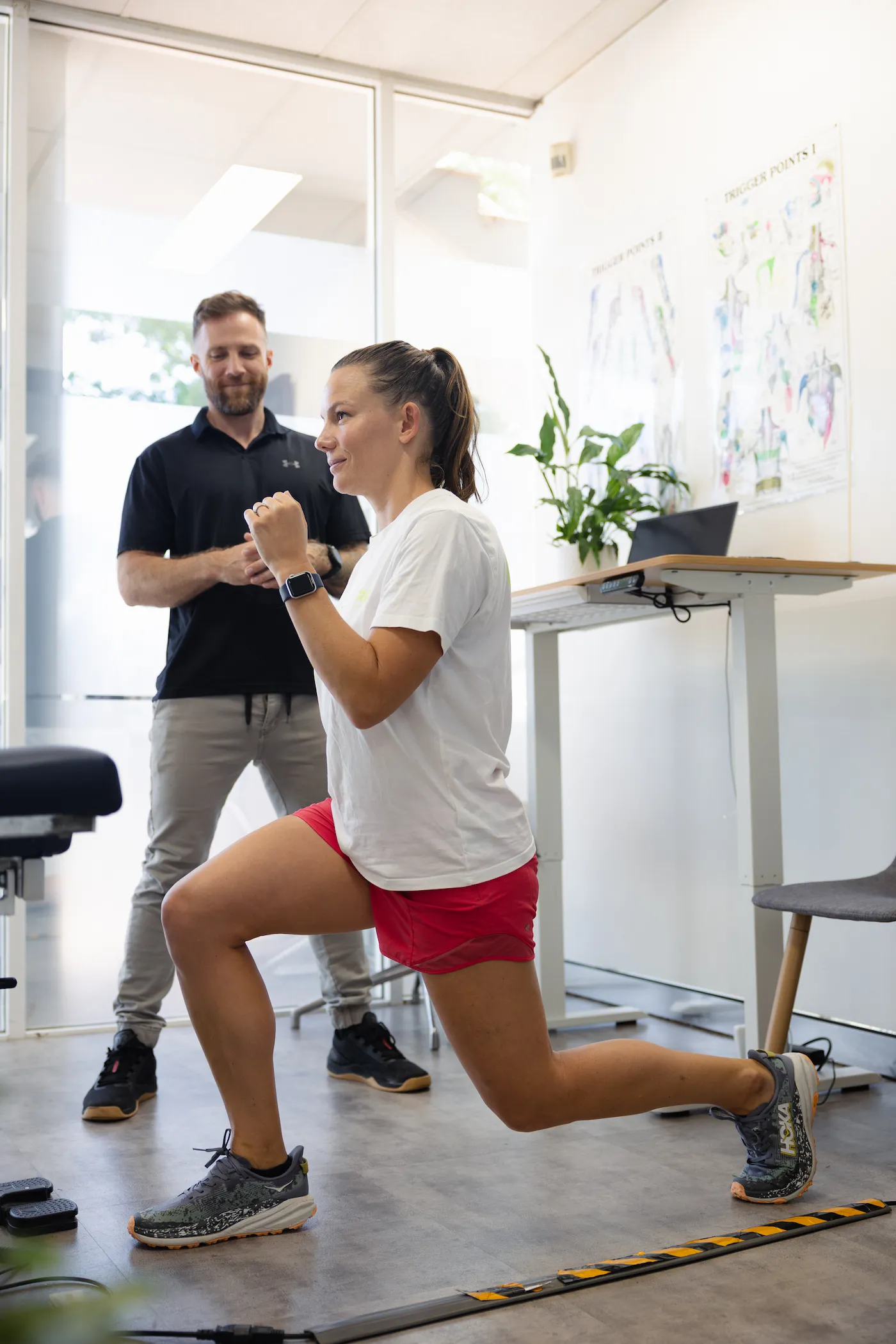
Now, I tend to focus more on functional core strength and the ability to maintain control while the rest of the body is moving. That might look like balancing on one leg while reaching in different directions, performing a single-leg squat, carrying a weight on one side of the body, doing an exercise with an unstable base of support, or controlling a movement where the arms or legs are moving independently. Even something as simple as standing on one leg while rotating your upper body challenges your ability to control your trunk while your centre of mass changes.
Other examples include:
- Single-leg deadlifts
- Suitcase carries
- Farmer’s carries
- Split squats
- Step-downs
- Single-arm presses
- Bird dogs
- Pallof presses
- Crawling variations
- Pilates exercises that combine trunk control with limb movement
These exercises don’t necessarily look like traditional “ab exercises”, but your core is working throughout them.
Do you need to brace your core all the time?
No.
There is a time and place for bracing, particularly when lifting heavy loads or performing a movement where you need a high level of trunk stiffness. But maintaining a maximal abdominal brace throughout the day is not the goal of good core function.
Your trunk needs to be able to adapt. When you walk, breathe, reach overhead, rotate or sit down, your muscles are constantly changing their level of activity. Stability comes from this ability to respond to changing demands, not from keeping everything switched on at maximum effort.
How to improve your core strength?
Start by considering what you actually need your core to do.
If your goal is general strength, exercises such as dead bugs, side planks, carries, squats, deadlifts and controlled rotational movements can all be useful. From there, you can gradually make the challenge more functional by introducing single-limb exercises, changes in balance, external loads, different positions or movements that require your trunk to respond while your arms and legs move.
The key is progressive overload. Just like any other muscle group, your core needs an appropriate challenge to become stronger. This could mean increasing resistance, repetitions, range of motion, exercise complexity or the amount of time you can maintain good control.
You also don’t need to train your core every day. Your trunk is already working during many of the exercises you perform throughout the week.
Core strength: the bigger picture
Core strength is not about creating a rigid spine or achieving a perfect posture. It is about having enough strength, endurance and coordination to control your trunk while allowing the rest of your body to move.
A strong core gives you a better foundation for everyday activities, exercise and sport. More importantly, it allows your body to respond to different loads and movements rather than relying on one fixed position.
The goal isn’t to stop your spine from moving. The goal is to give it the capacity and control to move well.