Pregnancy is one of the most extraordinary things the human body can do, and your pelvis knows it better than anyone. As a women’s health chiropractor, one of the most common conversations I have with my pregnant patients is “I didn’t expect my hips and pelvis to hurt this much.” So let’s talk about the sacroiliac joint (SIJ), hormones, and why so many pregnant women experience pelvic pain — and what we can do about it!
What is the sacroiliac joint?
The sacroiliac joint connects your sacrum (the triangular bone at the base of your spine) to your ilium (the large wing-shaped bones of your pelvis). It’s a stable joint by design. In its normal, non-pregnant state, the SIJ relies on a combination of bony compression and strong surrounding ligaments to keep it steady under the significant forces we place on it every day, such as walking, lifting, bending, and everything in between.
This stability comes from two mechanisms:
- Form closure — the shape of the joint surfaces fitting snugly together
- Force closure — the tension generated by surrounding ligaments and muscles that compresses the joint and keeps it from shifting.
Both are essential. And during pregnancy, both can be challenged by several factors.
How relaxin and progesterone affect the pregnancy ligaments
Here’s where it gets fascinating, and for many women, where the discomfort starts.
During pregnancy the body is releasing two key hormones: relaxin and progesterone. These hormones serve a powerful role, they soften and increase the extensibility of collagen-rich tissues throughout the body, particularly ligaments and smooth muscle. The goal is to allow the pelvis to gradually expand and accommodate growing bub, and ultimately, to open more readily during birth.
But here’s the trade-off: those same ligaments that are becoming more lax are also the ones responsible for maintaining force closure at the SIJ.
As the ligaments around the joint become lax, they lose their ability to generate sufficient tension to hold the joint securely — particularly during dynamic movement like walking, climbing stairs, or rolling over in bed (something my patients often tell me has become surprisingly painful). Research consistently links elevated relaxin levels to hypermobility at the SIJ during pregnancy, and this reduced force closure is a significant contributor to pelvic instability.
How pregnancy changes your pelvic mechanics
Alongside the hormonal changes, the physical demands of pregnancy also alter the mechanics of the pelvis, that place additional strain on the SIJ ligaments.
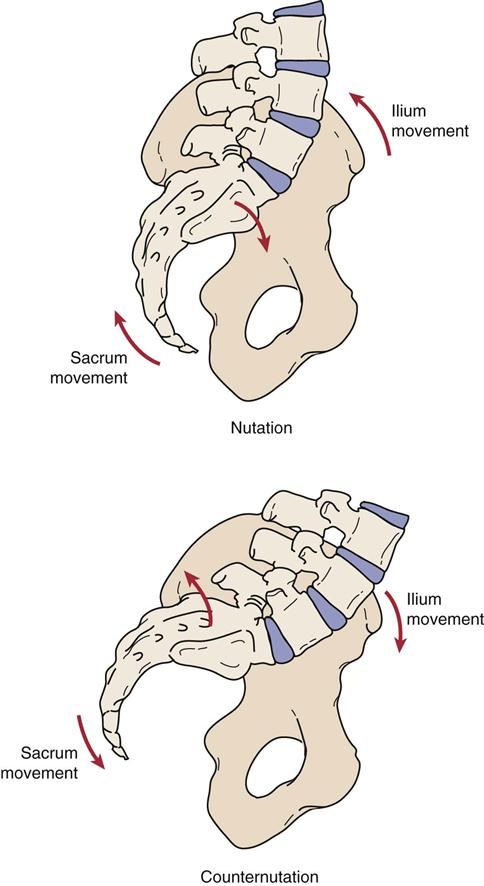
As pregnancy progresses and the belly grows, the lumbar spine typically increases its curve (lordosis), which causes the sacrum to tip forward into what we call nutation. This is a normal and necessary adaptation — but it increases tension on the posterior SIJ ligaments, which are the primary structures resisting that forward sacral movement.
Over time, sustained or excessive loading of these ligaments can lead to instability or sprain. It’s a compounding effect: hormones soften the ligaments, posture loads them more heavily, and the cumulative result is a joint that’s struggling to do its job.
Pregnancy-Related Pelvic Girdle Pain (PrPGP): Causes
Pregnancy-related pelvic girdle pain (PrPGP) affects somewhere between 14 and 33% of pregnant women.
What’s becoming increasingly clear is that SIJ instability during pregnancy is rarely caused by one single factor. It’s multifactorial, with contributions from:
- Hormonal ligamentous laxity
- Postural changes
- Altered function of the deep abdominal muscles
- Imbalances in the muscular slings
- Pelvic floor dysfunction
How chiropractic may help pregnancy-related SIJ pain
Understanding the “why” behind pelvic pain in pregnancy changes the conversation from “this is just part of being pregnant” to “this is something we can work with.”
As a women’s health chiropractor, my approach to SIJ-related pain during pregnancy focuses on several key areas:
- Restoring Joint Mechanics: Gentle, pregnancy-safe and trimester-specific chiropractic treatment can help restore optimal alignment at the SIJ and surrounding joints, reducing the mechanical load placed on already-stressed ligaments and tissues.
- Supporting Force Closure: Since the ligaments can’t do all the work right now, we support them. This means targeted exercises to strengthen the pelvic floor muscles, deep abdominals (particularly the transverse abdominis), and the gluteal and hip stabilisers that form part of the muscular slings around the pelvis.
- Pelvic Floor Assessment and Referral: Given the significant role pelvic floor function plays in SIJ stability, I often co-manage my pregnant patients with a women’s health physiotherapist.
- Load Management and Postural Guidance: Simple changes to how you move, sit, sleep, and carry load can make an enormous difference. Pelvic belts (SI belts) can also provide external support to supplement force closure when symptoms are significant.
- Education: Perhaps the most underestimated tool. When my patients understand what’s happening in their bodies, they’re better equipped to make decisions that support their recovery.
Your body is doing something extraordinary during pregnancy. The hormonal and structural changes that make pregnancy-related pelvic pain possible are the same ones that make birth possible. That doesn’t mean you have to simply endure the discomfort.
Feel free to reach out if you have questions or would like to book an assessment.