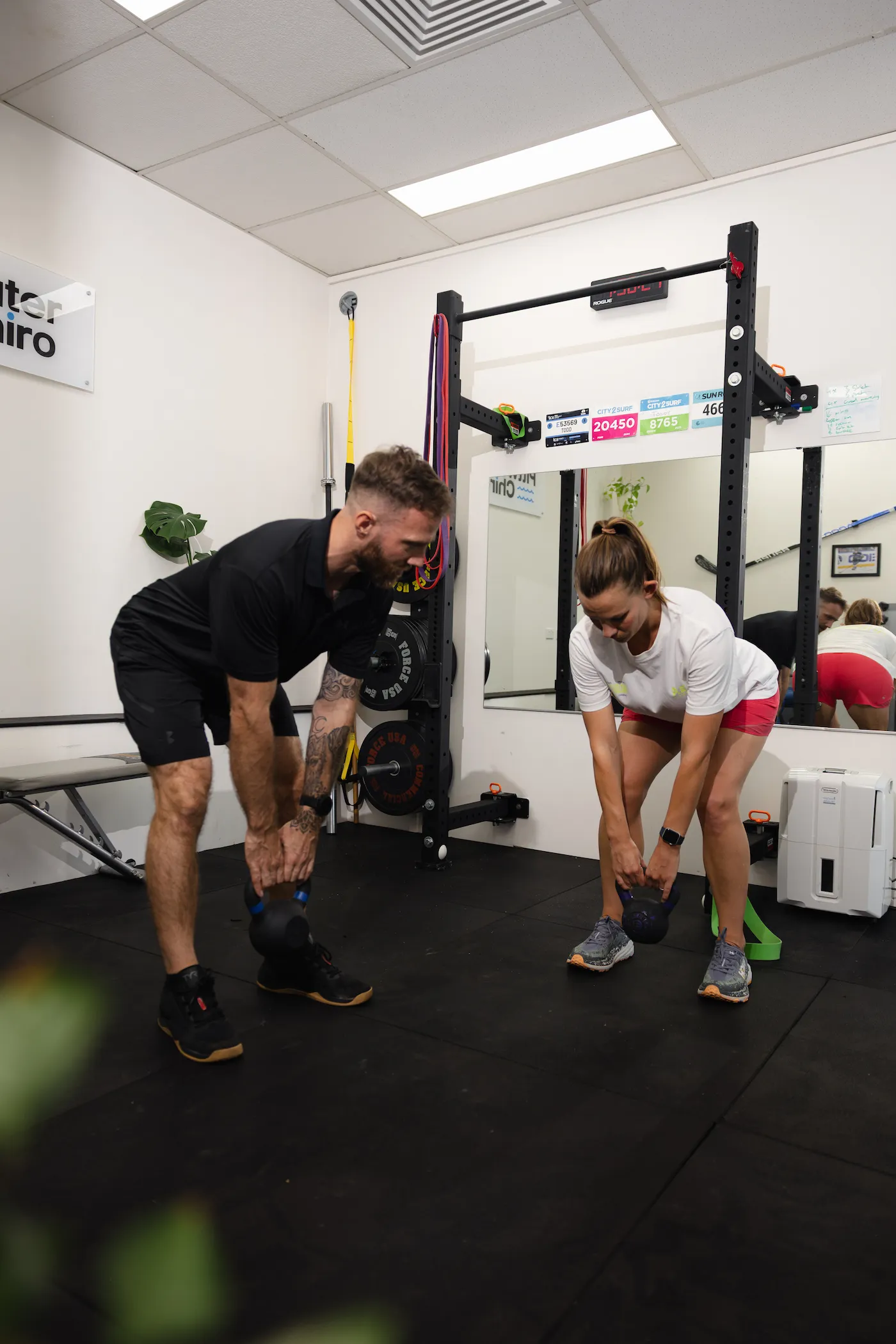
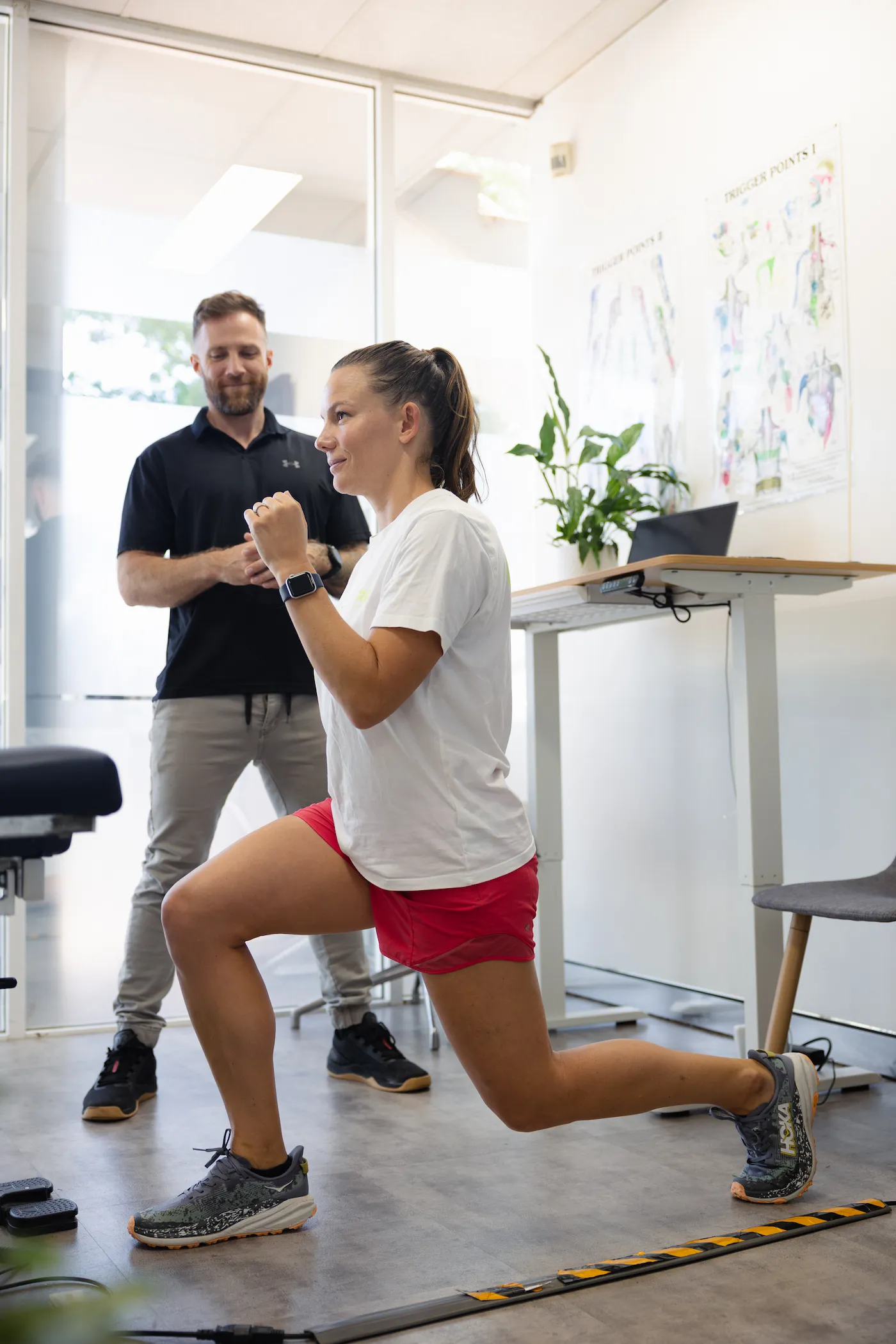
As a chiro, I see firsthand how bone health impacts every aspect of my patients’ lives. With a focus on women’s health, let’s talk about why resistance training isn’t just about building muscle – but about building a foundation for overall health and wellbeing.
Bone health and resistance training
Here’s something that might surprise you! Your bones aren’t static structures. They’re constantly breaking down and rebuilding themselves in a process called bone remodelling. Think of it as your body’s renovation project that never stops. Every day, old bone tissue is removed and fresh, new bone takes its place.
But here’s the catch—this process slows down as we age, particularly for women. After menopause, the decline in estrogen accelerates bone loss, with women losing up to 20% of their bone density in the five to seven years following menopause. This is why osteoporosis affects women four times more often than men.
Strength training and menopause
When you lift weights, perform resistance exercises, or even do bodyweight movements like push-ups, you’re not just working your muscles. You’re sending a powerful signal to your bones: “We need to be stronger.”
This process is called Wolff’s Law—bones adapt to the mechanical stress placed on them. When you create controlled stress through resistance training, your bones respond by becoming denser and stronger. Research shows that women who engage in regular resistance training can increase their bone mineral density by 1-3% annually, while sedentary women typically lose 1-2% per year!
Benefits beyond bone density
Recent studies have been particularly encouraging about resistance training’s impact on bone health:
Postmenopausal women: A 2023 systematic review found that resistance training programs lasting 12-24 months significantly improved bone density at the spine and hip in postmenopausal women. The key was consistency—exercising 2-3 times per week with progressive overload.
Younger women: Research shows that building peak bone mass in your 20s and 30s through resistance training creates a “bone bank” that protects you later in life. Women who strength train during these crucial years enter menopause with stronger bones and experience less dramatic bone loss over time.
Fracture prevention: Perhaps most importantly, studies demonstrate that women who regularly perform resistance exercises have a 40% lower risk of hip fractures and a 20% lower risk of spine fractures compared to those who don’t.
Beyond bone density: the complete picture
Resistance training doesn’t just make your bones denser—it creates a comprehensive defence system:
Improved balance and coordination: Stronger muscles and better proprioception mean fewer falls. Since 95% of hip fractures result from falls, this protection is invaluable.
Better posture: Strong back and core muscles support proper spinal alignment, reducing stress on vertebrae and decreasing the risk of compression fractures.
Functional strength: Being able to carry groceries, lift grandchildren, or get up from a chair without strain isn’t just about quality of life—it’s about maintaining independence as you age.
Safe exercises for women at every stage
You don’t need to become a powerlifter to protect your bones. Here’s what we recommend to our patients:
Start simple: Begin with bodyweight exercises like squats, push-ups (wall or modified), and planks. These movements load multiple bones simultaneously and require no equipment.
Focus on key areas: Prioritise exercises that target the spine, hips, and wrists—the most common fracture sites. Examples include:
- Squats and lunges for hips and spine
- Push-ups and rowing movements for wrists and spine
- Deadlifts and back extensions for spinal strength
Progressive overload: Gradually increase the challenge by adding weight, increasing repetitions, or progressing to more difficult variations. Your bones need to feel challenged to adapt.
Consistency over intensity: Two to three sessions per week are more beneficial than sporadic intense workouts. Your bones respond to regular, repeated stress.
For the gals
Perimenopause and menopause: This is when resistance training becomes even more critical. If you haven’t started yet, there’s no better time than now. Even women in their 70s and 80s can improve bone density through appropriate resistance training.
Pregnancy and postpartum: Modified resistance training during pregnancy can help maintain bone health, and resuming training postpartum is crucial for rebuilding bone density that may have been affected by breastfeeding.
Hormone health: Regular resistance training can help support healthy hormone levels, including growth hormone and IGF-1, which play important roles in bone formation.
Work with your healthcare team
As chiropractors, we often see patients who are dealing with the consequences of poor bone health—compression fractures, postural changes, and chronic pain. We wish more people understood that many of these issues are preventable.
If you’re new to resistance training, especially if you’re over 50 or have existing health conditions, we recommend:
- Getting a bone density scan (DEXA) to establish your baseline
- Working with a qualified trainer initially to ensure proper form
- Coordinating with your healthcare providers to ensure your program is appropriate for your individual needs
Whether you’re 25 or 75, your bones can still respond positively to resistance training. The earlier you start, the greater your bone bank will be. But even if you’re starting later in life, studies show significant improvements are still possible.
Ready to build stronger bones and prevent osteoporosis? Book a consultation with our chiropractors at Pittwater Chiro today.