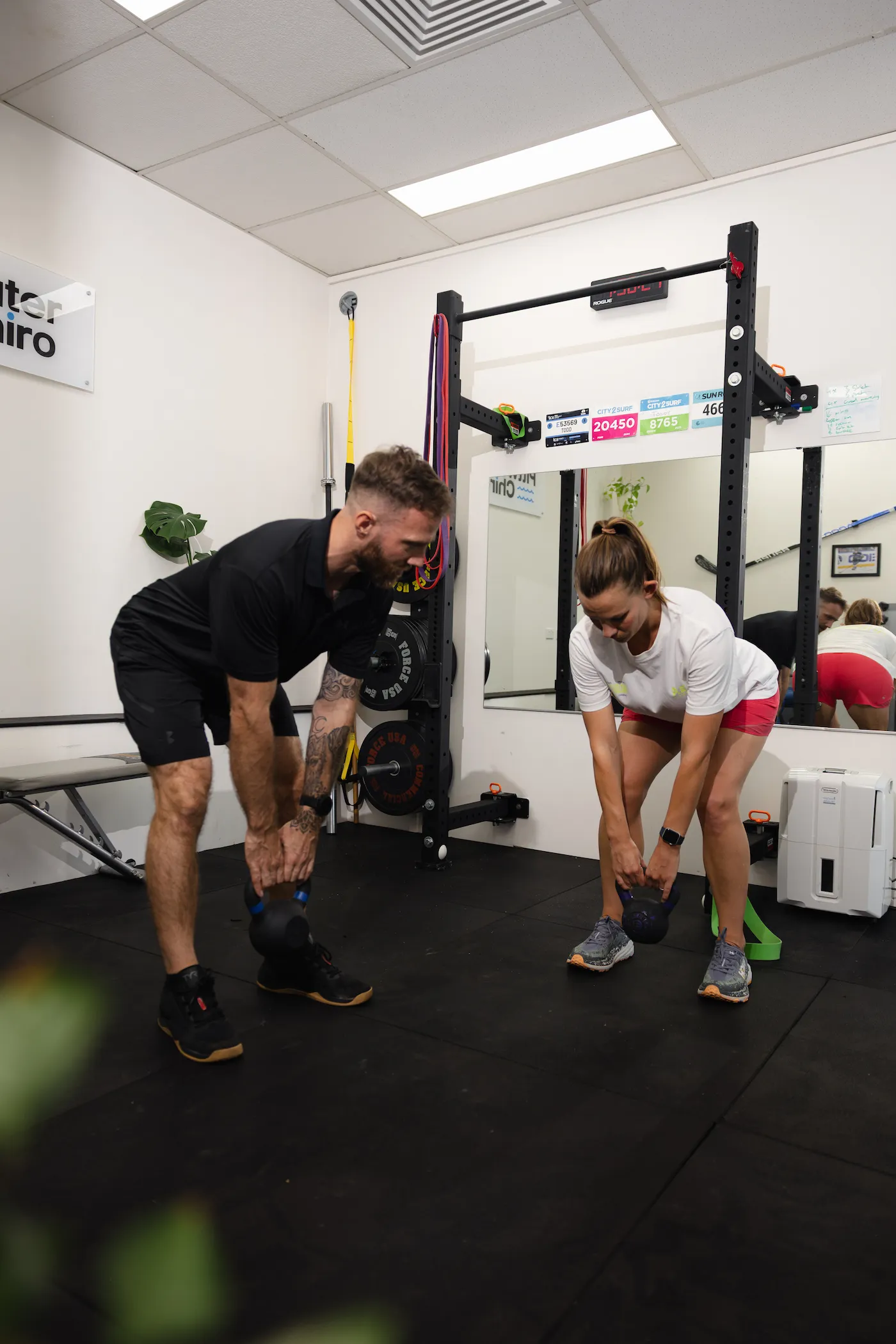
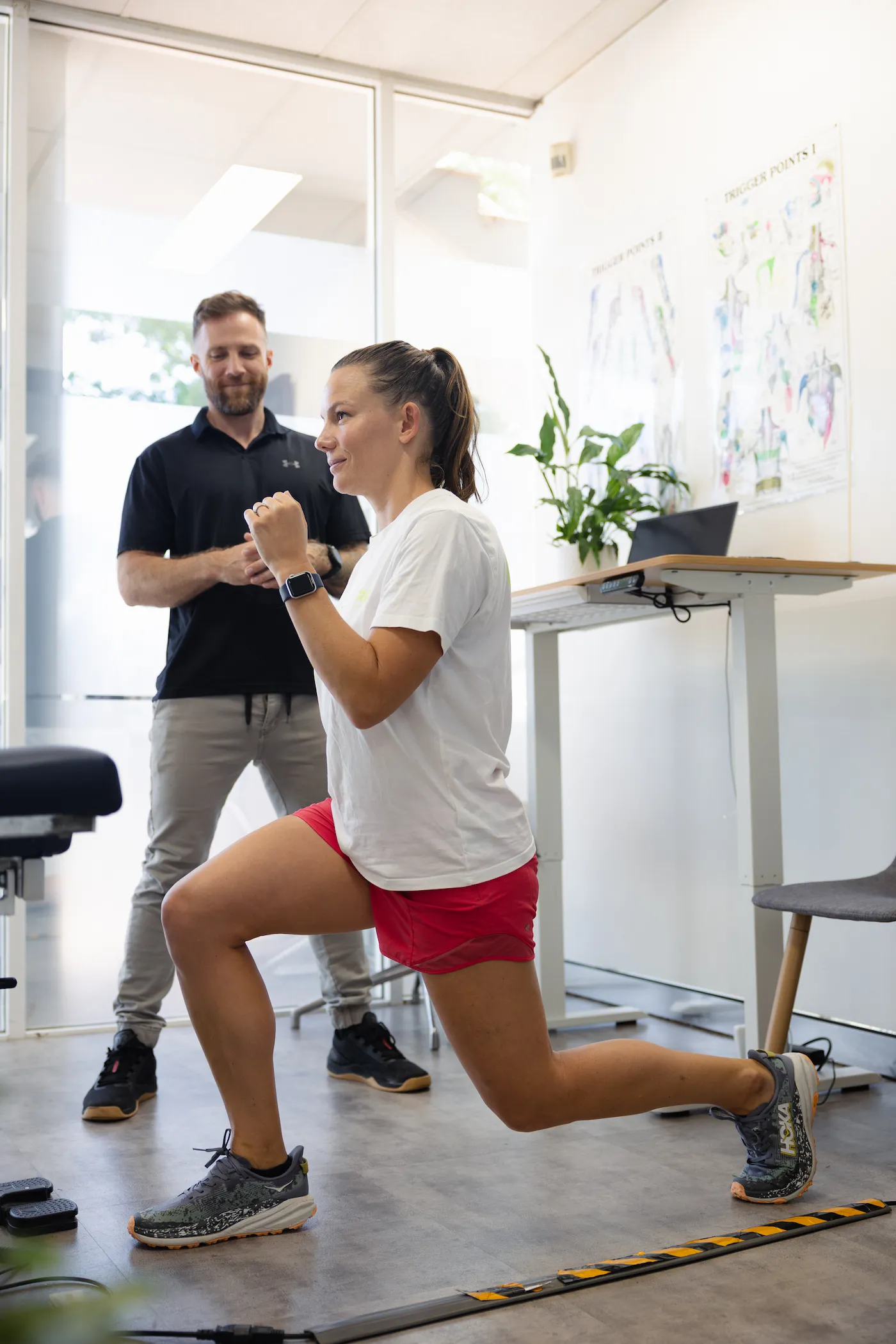
One of the most common presentations I see when treating expecting mums is round ligament tension. This is often described as a sudden, sharp, shooting pain around the groin or lower abdomen that tends to last anywhere from a few seconds to a few hours.
What is your round ligament?
Your round ligaments are fibrous bands that support your uterus, extending from the front of your uterus through your groin area to the labia majora. Think of them like strong support cables for your growing uterus.
In your non-pregnant state, these ligaments are relatively short and slack – doing their job quietly without much fuss. But during pregnancy? Everything changes.
Why does it hurt so much?
Your uterus grows from the size of a small pear to a watermelon over nine months. Those round ligaments have to stretch from about 10-12 centimetres to 50-60 centimeters in length. That’s more than five times their original length!
Imagine stretching a rubber band to five times its resting length and holding it there for months. That’s essentially what your round ligaments are doing – and why they can be so sensitive.
Hormones play their part
During pregnancy, your body produces relaxin and progesterone – hormones designed to loosen your ligaments to prepare for childbirth. While this is brilliant preparation for delivery, it also makes your round ligaments more sensitive and prone to irritation.
The sudden movement trigger
When you move suddenly – standing up, rolling over, coughing, sneezing, even laughing – those already-stretched ligaments get an additional rapid pull. It’s like snapping that overstretched rubber band. The result? That sharp, stabbing sensation that stops you in your tracks.
Why is it more common in the second trimester?
Round ligament pain typically peaks during the second trimester, particularly between weeks 14 and 24. Here’s why:
The rapid growth phase
This is when your uterus is expanding most dramatically. Your baby is growing quickly, your uterus is rising out of your pelvis into your abdomen, and those round ligaments are stretching at their fastest rate.
Think of it like growing pains during adolescence – the discomfort happens during the period of most rapid growth, not once you’ve reached your full height.
The adaptation period
By the third trimester, your round ligaments have typically adapted to their stretched position. The rate of growth slows, and your body has adjusted to the biomechanical changes. Many women find that their round ligament pain significantly improves or even disappears in the final months.
How can chiropractic help?
Having proper pelvic alignment balances round ligament tension. When your pelvis is aligned both ligaments experience equal supported tension, instead of one being pulled more than the other.
In the clinic, I use a pregnancy-specific chiropractic approach that focuses on sacral alignment and pelvic balance. Treatment varies from a combination of muscle release, dry needling, joint mobilisations, gentle adjustments and targeted exercises/stretches to get you moving like yourself again.
The techniques used are specifically designed for the pregnant body and have helped countless patients in our practice find relief.
Postural support through pregnancy
As your belly grows, your centre of gravity shifts forward. Your lower back curve increases to compensate, and this forward tilt increases the downward pull on your round ligaments.
Chiropractic care helps improve overall posture and alignment, reducing that excessive anterior pelvic tilt that creates constant tension on your round ligaments.
Movement education
One of the most valuable things I do with patients is teach them how to move differently. Small changes can have huge impacts.
For example:
- Rolling onto your side before getting out of bed (rather than sitting straight up)
- Supporting your belly with one hand when you feel a sneeze coming
- Moving slowly and deliberately when changing positions
- Using a pregnancy pillow for better sleep positioning
These tiny adjustments can change everything!
What is our goal?
- Reduced frequency and intensity of those sharp, stabbing pains
- Improved mobility – getting in and out of bed, cars, chairs, without triggering pain
- Improved sleep – easier to roll over without waking up in pain
- Less overall pelvic discomfort as pregnancy progresses
- More confidence in movement and daily activities
When to seek help
While round ligament pain is normal, there are times when pain requires immediate medical attention. I always tell my patients to trust their instincts.
Seek medical care immediately if you experience:
- Constant, severe pain that doesn’t improve with rest
- Pain accompanied by bleeding
- Fever or chills
- Cramping or contractions
- Pain with urinary symptoms
Your body is doing something incredible
Those round ligaments that are causing you discomfort? They’re working overtime to support and protect your growing baby.
The pain is real, the frustration is valid, and you don’t have to just “deal with it.” Gentle chiropractic techniques reduce inflammation, support your posture, and help you move comfortably throughout pregnancy.
Think of pregnancy chiropractic care as giving your body the support it needs to do this incredible work without unnecessary suffering.
Your next steps
The pain is real, the frustration is valid, and you don’t have to just “deal with it.” Gentle chiropractic techniques reduce inflammation, support your posture, and help you move comfortably throughout pregnancy.
At Pittwater Chiro, we regularly help expecting mums across Mona Vale, Balgowlah, and the Northern Beaches manage pregnancy-related discomfort like round ligament pain. Our pregnancy-specific chiropractic care focuses on gentle, safe techniques tailored to your body – book online.