
REDs: the silent threat to female athletes

As a chiropractor working with active women weekly, I see the physical consequences of under-fuelling more than most people realise. Stress fractures that won’t heal. Recurring injuries that won’t resolve. Persistent fatigue that rest doesn’t fix. These aren’t just training problems. They’re often signs of something much bigger = Relative Energy Deficiency in Sport (REDs). What Is REDs? RED-S (Relative Energy Deficiency in Sport) occurs when an athlete doesn’t consume enough energy to meet the combined demands of exercise and normal body function. Over time, this low energy availability can affect health, recovery and athletic performance. This leaves your body without enough fuel to support both your performance and normal physiological function, so it starts shutting things down. REDs don’t only affect elite athletes. It affects recreational runners, gym-goers, dancers, and active women who are simply trying to be healthy but have inadvertently created a chronic energy deficit. Why does REDs happen? Most athletes experiencing REDs aren’t intentionally restricting food. They’re: This is what makes REDs so insidious. Energy availability is the amount of energy your body has left after accounting for exercise. Historically, around 45 kcal per kilogram of fat-free mass per day has been used as a reference for adequate energy availability, while levels around or below 30 kcal/kg FFM/day have been associated with physiological disruption in research. However, the 2023 IOC consensus emphasises that there is no single cut-off that determines whether an individual will develop RED-S — the amount of energy required varies between people. In simple terms, energy availability is the amount of energy your body has left after exercise. For example, if someone has 60 kg of fat-free mass, optimal energy availability is around 45 calories per kilogram, which equals about 2,700 calories left over for the body each day. If that person burns 800 calories through exercise, they would need to eat roughly 3,500 calories that day to maintain that level. Once energy availability drops toward 30 calories per kilogram of fat-free mass — around 1,800 calories left over in this example — the body may start struggling to adequately support things like hormones, bone health, recovery, immunity and normal metabolic function. How do you know if you have REDs? The 2023 IOC consensus statement significantly expanded our understanding of REDs – moving far beyond the original “Female Athlete Triad” to recognise a much broader spectrum of consequences. Signs to watch for: Physical: Performance: Psychological: The menstrual cycle is particularly important. Hormonal disruption is one of the earliest and most reliable indicators of REDs – and the bone health consequences of prolonged hormonal suppression can be irreversible, particularly in younger athletes. What can help with REDs? REDs requires a multidisciplinary approach: REDs is not a niche problem for elite athletes. It’s a real, clinically significant condition that I encounter regularly in active people of all levels. Please seek assessment from a sports medicine physician or healthcare practitioner familiar with REDs. Early intervention dramatically improves outcomes.
Sacroiliac joint pain during pregnancy: why your pelvis hurts and what can help

Pregnancy is one of the most extraordinary things the human body can do, and your pelvis knows it better than anyone. As a women’s health chiropractor, one of the most common conversations I have with my pregnant patients is “I didn’t expect my hips and pelvis to hurt this much.” So let’s talk about the sacroiliac joint (SIJ), hormones, and why so many pregnant women experience pelvic pain — and what we can do about it! What is the sacroiliac joint? The sacroiliac joint connects your sacrum (the triangular bone at the base of your spine) to your ilium (the large wing-shaped bones of your pelvis). It’s a stable joint by design. In its normal, non-pregnant state, the SIJ relies on a combination of bony compression and strong surrounding ligaments to keep it steady under the significant forces we place on it every day, such as walking, lifting, bending, and everything in between. This stability comes from two mechanisms: Both are essential. And during pregnancy, both can be challenged by several factors. How relaxin and progesterone affect the pregnancy ligaments Here’s where it gets fascinating, and for many women, where the discomfort starts. During pregnancy the body is releasing two key hormones: relaxin and progesterone. These hormones serve a powerful role, they soften and increase the extensibility of collagen-rich tissues throughout the body, particularly ligaments and smooth muscle. The goal is to allow the pelvis to gradually expand and accommodate growing bub, and ultimately, to open more readily during birth. But here’s the trade-off: those same ligaments that are becoming more lax are also the ones responsible for maintaining force closure at the SIJ. As the ligaments around the joint become lax, they lose their ability to generate sufficient tension to hold the joint securely — particularly during dynamic movement like walking, climbing stairs, or rolling over in bed (something my patients often tell me has become surprisingly painful). Research consistently links elevated relaxin levels to hypermobility at the SIJ during pregnancy, and this reduced force closure is a significant contributor to pelvic instability. How pregnancy changes your pelvic mechanics Alongside the hormonal changes, the physical demands of pregnancy also alter the mechanics of the pelvis, that place additional strain on the SIJ ligaments. As pregnancy progresses and the belly grows, the lumbar spine typically increases its curve (lordosis), which causes the sacrum to tip forward into what we call nutation. This is a normal and necessary adaptation — but it increases tension on the posterior SIJ ligaments, which are the primary structures resisting that forward sacral movement. Over time, sustained or excessive loading of these ligaments can lead to instability or sprain. It’s a compounding effect: hormones soften the ligaments, posture loads them more heavily, and the cumulative result is a joint that’s struggling to do its job. Pregnancy-Related Pelvic Girdle Pain (PrPGP): Causes Pregnancy-related pelvic girdle pain (PrPGP) affects somewhere between 14 and 33% of pregnant women. What’s becoming increasingly clear is that SIJ instability during pregnancy is rarely caused by one single factor. It’s multifactorial, with contributions from: How chiropractic may help pregnancy-related SIJ pain Understanding the “why” behind pelvic pain in pregnancy changes the conversation from “this is just part of being pregnant” to “this is something we can work with.”As a women’s health chiropractor, my approach to SIJ-related pain during pregnancy focuses on several key areas: Your body is doing something extraordinary during pregnancy. The hormonal and structural changes that make pregnancy-related pelvic pain possible are the same ones that make birth possible. That doesn’t mean you have to simply endure the discomfort. Feel free to reach out if you have questions or would like to book an assessment.
Resistance training matters for women
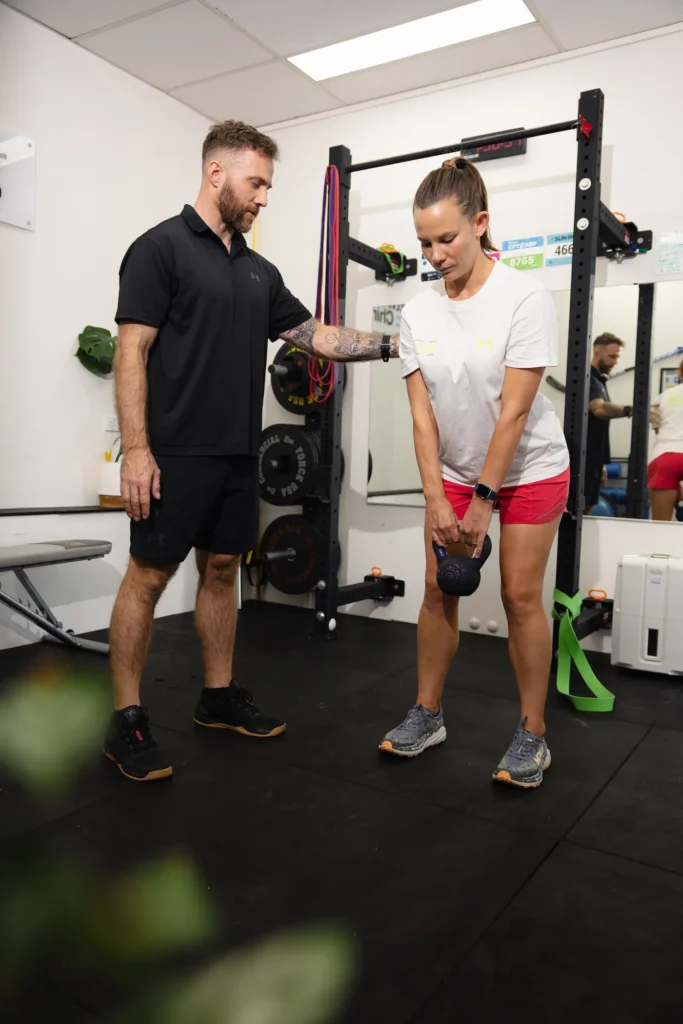
As a chiro, I see firsthand how bone health impacts every aspect of my patients’ lives. With a focus on women’s health, let’s talk about why resistance training isn’t just about building muscle – but about building a foundation for overall health and wellbeing. Bone health and resistance training Here’s something that might surprise you! Your bones aren’t static structures. They’re constantly breaking down and rebuilding themselves in a process called bone remodelling. Think of it as your body’s renovation project that never stops. Every day, old bone tissue is removed and fresh, new bone takes its place. But here’s the catch—this process slows down as we age, particularly for women. After menopause, the decline in estrogen accelerates bone loss, with women losing up to 20% of their bone density in the five to seven years following menopause. This is why osteoporosis affects women four times more often than men. Strength training and menopause When you lift weights, perform resistance exercises, or even do bodyweight movements like push-ups, you’re not just working your muscles. You’re sending a powerful signal to your bones: “We need to be stronger.” This process is called Wolff’s Law—bones adapt to the mechanical stress placed on them. When you create controlled stress through resistance training, your bones respond by becoming denser and stronger. Research shows that women who engage in regular resistance training can increase their bone mineral density by 1-3% annually, while sedentary women typically lose 1-2% per year! Benefits beyond bone density Recent studies have been particularly encouraging about resistance training’s impact on bone health: Postmenopausal women: A 2023 systematic review found that resistance training programs lasting 12-24 months significantly improved bone density at the spine and hip in postmenopausal women. The key was consistency—exercising 2-3 times per week with progressive overload. Younger women: Research shows that building peak bone mass in your 20s and 30s through resistance training creates a “bone bank” that protects you later in life. Women who strength train during these crucial years enter menopause with stronger bones and experience less dramatic bone loss over time. Fracture prevention: Perhaps most importantly, studies demonstrate that women who regularly perform resistance exercises have a 40% lower risk of hip fractures and a 20% lower risk of spine fractures compared to those who don’t. Beyond bone density: the complete picture Resistance training doesn’t just make your bones denser—it creates a comprehensive defence system: Improved balance and coordination: Stronger muscles and better proprioception mean fewer falls. Since 95% of hip fractures result from falls, this protection is invaluable. Better posture: Strong back and core muscles support proper spinal alignment, reducing stress on vertebrae and decreasing the risk of compression fractures. Functional strength: Being able to carry groceries, lift grandchildren, or get up from a chair without strain isn’t just about quality of life—it’s about maintaining independence as you age. Safe exercises for women at every stage You don’t need to become a powerlifter to protect your bones. Here’s what we recommend to our patients: Start simple: Begin with bodyweight exercises like squats, push-ups (wall or modified), and planks. These movements load multiple bones simultaneously and require no equipment. Focus on key areas: Prioritise exercises that target the spine, hips, and wrists—the most common fracture sites. Examples include: Progressive overload: Gradually increase the challenge by adding weight, increasing repetitions, or progressing to more difficult variations. Your bones need to feel challenged to adapt. Consistency over intensity: Two to three sessions per week are more beneficial than sporadic intense workouts. Your bones respond to regular, repeated stress. For the gals Perimenopause and menopause: This is when resistance training becomes even more critical. If you haven’t started yet, there’s no better time than now. Even women in their 70s and 80s can improve bone density through appropriate resistance training. Pregnancy and postpartum: Modified resistance training during pregnancy can help maintain bone health, and resuming training postpartum is crucial for rebuilding bone density that may have been affected by breastfeeding. Hormone health: Regular resistance training can help support healthy hormone levels, including growth hormone and IGF-1, which play important roles in bone formation. Work with your healthcare team As chiropractors, we often see patients who are dealing with the consequences of poor bone health—compression fractures, postural changes, and chronic pain. We wish more people understood that many of these issues are preventable. If you’re new to resistance training, especially if you’re over 50 or have existing health conditions, we recommend: Whether you’re 25 or 75, your bones can still respond positively to resistance training. The earlier you start, the greater your bone bank will be. But even if you’re starting later in life, studies show significant improvements are still possible. Ready to build stronger bones and prevent osteoporosis? Book a consultation with our chiropractors at Pittwater Chiro today.
Supporting Women’s Health Through Chiropractic

Women’s bodies undergo incredible changes throughout life — from adolescence to pregnancy, postpartum recovery, and menopause. These shifts come with physical demands that can affect your mobility, comfort, and overall well-being. At Pittwater Chiro, we understand how hormonal cycles, pregnancy, birth, and the demands of motherhood can impact your body. Whether you’re dealing with monthly back pain, hip tightness during pregnancy, or struggling to get out of bed after a C-section, we’ve helped women just like you feel stronger, move better, and recover faster. Hormonal influences on your body Each month, hormonal changes affect how your joints and muscles feel. Many women experience back pain, headaches, or pelvic discomfort around their cycle. Through gentle adjustments and soft tissue therapy, we help ease this monthly tension and support your body’s natural rhythm. One of our patients shared: Pregnancy care that helps Pregnancy is an exciting time, but let’s be real, it can be tough on your body. Back and pelvic pain, round ligament tension, and postural changes from your growing belly are incredibly common. The hormones that prepare your body for labour also create instability in other joints, often leading to pain in the hips, back, or shoulders. We use pregnancy-safe techniques to reduce discomfort, improve pelvic alignment, and help you stay active and confident throughout your pregnancy. As one mum told us: “Seeing someone experienced in pregnancy chiropractic gave me peace of mind. It really eased my pain and helped me stay active through the final trimester.” Postpartum recovery — with real results After birth, whether it’s vaginal or via C-section, your body starts to rebuild. But lifting, feeding, and sleepless nights can bring a whole new wave of strain. We’re here to support your return to comfort, whether you’re recovering from birth or dealing with postural strain from breastfeeding and baby-carrying. One postpartum mum shared: “After two C-sections I was having the worst time with my lower back. My goal was just to get in and out of bed pain-free. Within 6 weeks, we achieved that!” Another added: “After my third baby, my swelling was next level. Lisa gave me the most incredible lymphatic drainage massage — I finally got my ankles back!” Common conditions we support: When to reach out: Consider booking in if you’re experiencing: Why women trust Pittwater Chiro Whether it’s your first baby, your third C-section, or you’re navigating perimenopause, we take time to understand what’s happening in your body and tailor treatment to your needs. As one patient put it:
