
Understanding Achilles Tendinopathy: How to Recover

Achilles tendinopathy is a common issue among active people and notoriously slow to heal. Whether you’re a runner, on your feet all day, or pushing through workouts, pain and stiffness at the back of your ankle can be frustrating. But with the right approach, recovery is possible. What Is the Achilles Tendon, a Tendinopathy — and Why Does It Matter? The Achilles is a unique tendon. It’s built to store and release energy during walking, running, and jumping. Because it constantly manages high loads, its tissue turns over slowly. This makes it prone to breakdown under stress and slower to recover than muscle tissue. Achilles tendinopathy isn’t just inflammation—it’s a degenerative process. The tendon’s collagen fibers lose their healthy alignment and become disorganized. The tissue often becomes waterlogged, stiff, and less responsive to stress. This change occurs due to chronic overload, poor biomechanics, or underlying health factors. The Role of Overuse and Load Tendinopathy usually builds over time. Repeated strain without proper recovery leads to small microtraumas that the tendon can’t fully repair. On the other hand, tendon rupture is often the result of a sudden, forceful load—typically on a tendon that’s already been weakened. Load Stimulates Repair—But It Has to Be the Right Kind Tendons respond positively to mechanical loading. Research shows that all contraction types—concentric, eccentric, and isometric—can stimulate tendon adaptation, provided the load is sufficient. Heavier loads and longer times under tension are especially effective. Simply put: it’s not just what you do, but how you do it that matters. Inflammation Isn’t Always the Enemy Acute inflammation plays an essential role in healing. It increases blood flow and kickstarts collagen production. Suppressing this inflammation too early (e.g., with NSAIDs) can interfere with tendon recovery, especially beyond the first 24–48 hours post-injury. Tendons Are Slow to Change—But They Do Because tendons are metabolically slow, full remodeling after injury can take 6–12 months. That’s why consistent, progressive loading is key. Think of it as building tendon resilience over time—not looking for a quick fix. Risk Factors Beyond Training Your rehab should address more than just movement patterns. Factors like body composition, diet, and health history matter: Medications can also play a role: Age and Tendon Health As we age, our tendons lose water content and become less elastic. Collagen turnover slows, which means healing takes longer. After age 30, tendon rupture risk increases. But exercise can help offset these changes. In fact, studies show that heavy resistance training in older adults leads to measurable improvements in tendon structure and strength. How Tendons Adapt Over Time Tendons, like muscles and bones, respond to long-term loading. Studies show that: What About Eccentric vs Concentric vs Isometric? Good news: the contraction type matters less than how much load you’re using and how you apply it. All types can be beneficial as long as the load is appropriate. Instead of focusing on movement type, prioritize heavy, slow, controlled exercise with progressive overload. A Thoughtful, Individualised Rehab Approach Effective rehab for Achilles tendinopathy isn’t one-size-fits-all. It needs to: General rehab tips include: Final Thoughts Achilles tendinopathy is complex. It involves tissue changes, systemic health factors, and load management. But tendons do respond to the right kind of load. Recovery may be slow, but it’s absolutely achievable. If you’re dealing with Achilles pain or just want to future-proof your body, I can help. Let’s build a plan backed by science and tailored to your life. References
Is surgery for a rotator cuff tear necessary?
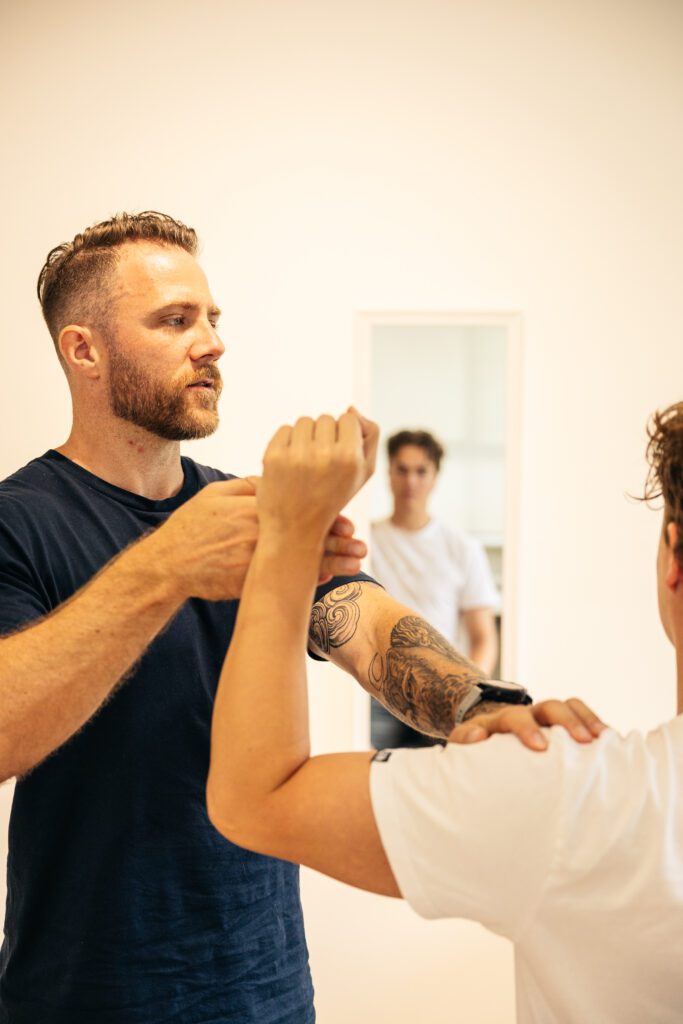
When it comes to a rotator cuff tear, one of the most common questions patients and healthcare providers grapple with is: should we opt for shoulder surgery or stick with conservative care (chiropractic/physiotherapy/massage/osteopathy)? The answer can be more complex and depends on various factors, including the severity of the tear, patient preferences, and long-term goals. Let’s dive into the current recommendations and evidence to help guide this decision. First off, let’s break down what a rotator cuff tear means A rotator cuff tear is damage to the tendons and muscles that stabilise the shoulder joint. These tears can be traumatic (caused by an injury) or degenerative (resulting from wear and tear over time). Symptoms can include pain, weakness, and limited range of motion, however, some individuals may have a tear in their rotator cuff without any significant symptoms. Research suggests the most commonly torn tendon is the supraspinatus tendon 70 – 85% of the time. Do I have to go under the knife? Many people believe that a rotator cuff tear means either undergoing surgery or living a life of pain and disability. Realistically this isn’t true. Rotator cuff tears are common and should be seen as a normal part of aging, like wrinkles and grey hair. Research shows that rotator cuff tears can be present without causing any symptoms, especially in individuals over 50. One study found that if you are over the age of 50, a rotator cuff tear seen on a scan is twice as likely not to cause symptoms, and this increases to four times as likely by the age of 80. Progressions vs. Stability Research suggests that roughly 50% of rotator cuff tears progress in size over 5 years, full thickness tears are more likely to progress in size when compared to partial thickness tears. Partial tears are relatively stable in the short to intermediate term. There is a growing body of evidence to suggest that small full-thickness tears can remain stable and even heal over 3 – 4 years. Tear progression is shown to be negatively impacted by the following things: Another common misconception regarding rotator cuff tears is the way these tears look. Many people believe all tendons are thick rope-like structures at the end of all our muscles, while this is true for some tendons, like those in our forearms and biceps, it is not true for all tendons. In reality, tendons vary in shape and structure, and some are a lot flatter, broader and thicker than others, like those of the rotator cuff. The rotator cuff tendons form a broad, continuous structure around the shoulder joint. This is where a helpful analogy to explain rotator cuff tears plays a role, which is the “hole in a blanket”. Because the tendon is so thick and broad, when a tear occurs, it is like a hole in a large blanket. Just because there is a hole, it doesn’t mean the rest of the blanket is useless. This analogy helps to visualise and understand that the rest of your tendon can still function well, and can be strengthened without creating further damage. Now let’s compare conservative care and surgery Conservative care includes chiropractic care, physiotherapy, osteopathy, exercise physiology, or any other allied health practitioners who can help with your injury without operating on you. At Pittwater Chiro, our treatment would involve a blend of hands-on techniques to assist with pain reduction alongside at-home pain management strategies, exercise prescription to help strengthen the rotator cuff and its surrounding muscles, advice on temporary modifications to work, sports or hobbies which may be aggravating the pain, and advice on how to return to your normal activities in the future. The hands-on treatment we provide can include massage and other soft tissue release techniques, joint mobilisations and manipulations, shockwave therapy, dry needling, and cupping Shoulder surgery is usually considered when conservative care fails to provide adequate relief or when the tear is severe. Surgical options include: Rotator Cuff Tear Summary When considering if surgery can alter the progression of a rotator cuff tear, research has found that surgery does not change the underlying tendon biology which causes the rotator cuff to tear. Therefore, the likelihood of recurrent symptoms and poor functioning of the rotator cuff following surgery can be similar to the likelihood of progression without surgery. Research also suggests that the traumatic onset of a rotator cuff tear is not a sufficient reason to choose surgery over non-operative care. Regardless of whether your tear is non-traumatic or traumatic onset, the first line of care for anyone with partial or full-thickness tears according to the evidence is a period of non-surgical conservative care. For those suffering from a non-traumatic partial or full-thickness tear, individuals benefit from activity modification, chiropractic care, and therapeutic exercise, and if this fails then there is the consideration for a corticosteroid injection. References A B C
