
Dry Needling: What is it and how can it help?

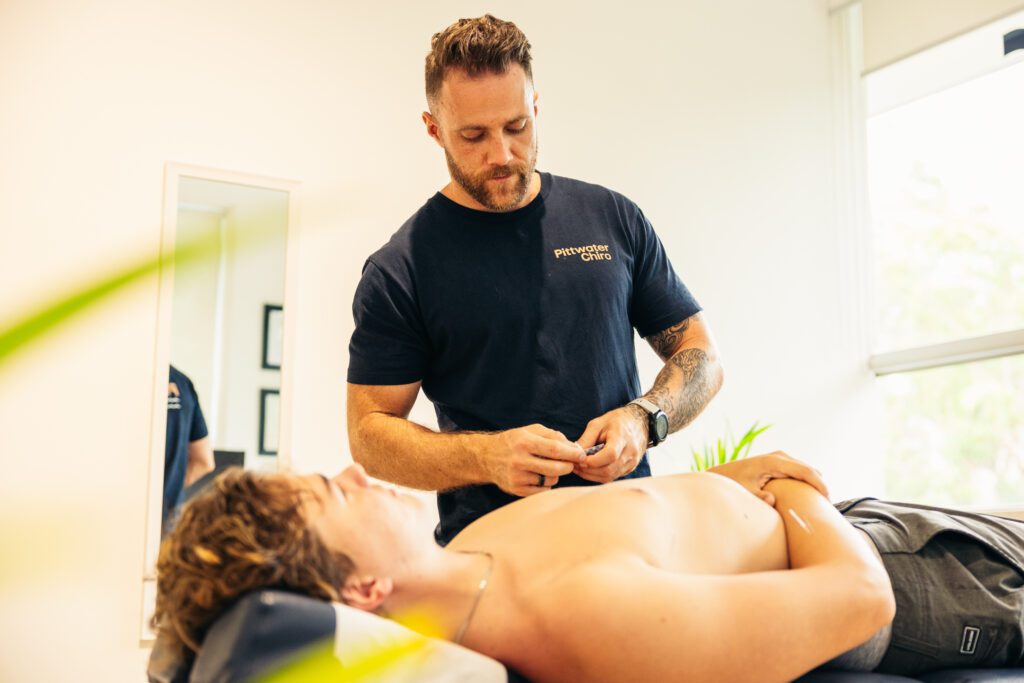
One of the questions I get asked most in clinic is, “What exactly is dry needling?” For many people, the thought of needles can sound intimidating, but once they understand how it works and experience the benefits, it’s often one of their favourite treatments. It involves inserting a fine, sterile, single-use needle into tight muscles or myofascial trigger points; which are those stubborn “muscle knots” that can develop after injury, repetitive movements, poor posture, or even stress. How does dry needling work? One of the most interesting parts of dry needling is something called a local twitch response. When the needle reaches a trigger point, it may cause a brief, involuntary contraction of a small group of muscle fibres. This happens because the needle stimulates sensitive nerve endings and muscle fibres within the trigger point, creating a reflex through the spinal cord. It’s not something you can control, and not every muscle will twitch. Patients often ask me whether the twitch means the treatment is “working.” While a twitch can be a really positive sign that we’ve targeted an irritable trigger point, it isn’t essential for dry needling to be effective. The twitch itself doesn’t relax the muscle. Instead, it’s thought to help interrupt the abnormal cycle of sustained muscle contraction that occurs within a trigger point. Following this response: Contracted muscle fibres can return closer to their normal resting length. Local blood flow improves, delivering oxygen and nutrients while helping remove metabolic waste. Pain-producing chemicals within the muscle are reduced. The muscle often relaxes, resulting in less pain and improved movement. Beyond the twitch response, dry needling also influences how the nervous system processes pain. This is one of the reasons many patients notice they can move more freely or comfortably following treatment. What are the benefits of dry needling? While every patient responds differently, some of the most common benefits I see in clinic include: Reduced muscle tightness and pain. Improved flexibility and range of motion. Reduced muscle spasms. Better muscle function and movement. Faster recovery after training or injury. Relief from tension headaches and certain types of neck pain. Improved outcomes when combined with chiropractic adjustments, soft tissue therapy, and rehabilitation exercises. Dry needling isn’t a “quick fix,” but when it’s used as part of a comprehensive treatment plan, it can be an incredibly effective tool for helping people move and feel better. Who can benefit? I commonly use dry needling with patients experiencing: Neck and back pain. Shoulder pain and restricted movement. Hip and gluteal pain. Sports injuries. Muscle strains. Tennis or golfer’s elbow. Jaw muscle tension (TMJ-related pain). Tension headaches and cervicogenic headaches. Persistent muscle tightness and trigger points. Reduced mobility caused by muscular stiffness. Whether you’re an office worker with tight shoulders, a runner with stubborn calf tightness, a swimmer with posterior shoulder tension, or simply someone dealing with ongoing muscular pain, dry needling may be an appropriate addition to your treatment plan. Is dry needling safe? Dry needling is considered a safe procedure when performed by a trained healthcare professional using sterile, single-use needles. Before treatment, I always take a thorough health history to make sure it’s appropriate for you. Contraindications Dry needling isn’t suitable in some situations, including: Over areas of active infection, open wounds, or compromised skin. In areas affected by active lymphoedema. Severe needle phobia that makes treatment unsafe. Certain medical conditions that require urgent medical management. Precautions Additional care may be required if you: What should I expect afterwards? It’s completely normal to feel some muscle soreness after dry needling. Many people describe it as feeling similar to the soreness you get after a workout. This usually settles within 24 to 48 hours. Some patients feel immediate relief after treatment, while others notice gradual improvement over the following day or two. Everyone responds a little differently, depending on the condition being treated. To help you get the most out of your treatment, I usually recommend: If you experience severe pain, increasing swelling, chest pain, difficulty breathing, fever, or any symptoms that concern you after treatment, seek medical attention promptly and let your practitioner know. My approach to Dry Needling I don’t see dry needling as a stand-alone treatment. While it can be incredibly effective at reducing muscle tension and pain, the best long-term results come from identifying why the problem developed in the first place. That’s why I often combine dry needling with chiropractic adjustments, soft tissue therapy, mobility work, strengthening exercises, and advice tailored to your lifestyle and goals. My aim isn’t just to help you feel better for a day, it’s to help you move better, recover well, and stay doing the activities you enjoy.
How neck pain can be improved with chiropractic treatment

Chiropractic care is a proven, drug-free method for relieving neck pain and improving function. By using spinal manipulation, manual therapy, and instrumental techniques, chiropractors help reduce pain and restore mobility. Learn more about how these treatments can offer effective relief from both acute and chronic neck pain.
Welcome to Pittwater Chiro

Founded by husband and wife Todd and Cath, Pittwater Chiro is not your standard chiropractic clinic. Located on the Northern Beaches of Sydney, it is a professional and friendly space. Bringing clients the best tailored care while nurturing long-lasting relationships is their focus. Pittwater Chiro serves as a facilitator to better physical health and wellbeing. A consistent point of contact, a place people can always visit for health help and advice. Our team of professionals uses the latest scientific methods to allow clients to enjoy life to the fullest. “We offer our patients a safe and welcoming space where they can come and share their stories”, co-founder Cath says. An injury is so much more than physical pain. It affects all areas of life. Pittwater Chiro deeply understands that and invests the time needed to help its clients adjust and manage the change that physical pain can inflict. Clients spend a small fraction of their week in our clinic. The majority of their time is spent at home, at work, anywhere they need to be. In order to facilitate proper recovery, clients have to learn how to manage their health once they step out of the clinic’s door. The professionals at Pittwater Chiro believe in the importance of independence and are invested in guiding their patients on the healing journey. They teach clients techniques to improve their pain and injuries and minimise the impact on their everyday lives. Todd’s Vision for Pittwater Chiro “I would like our clinic to be seen as the go-to space within our community to help families not only overcome acute injuries but as a place they seek when they need health support. We would love to help them feel better, move better and be better educated on how to accommodate their health needs without compromising on their lifestyle. We work to remove the fear that may be associated with injury and pain. This can weigh people down or stop them from achieving their goals.” The Pittwater Chiro Rebrand Pittwater Chiro has undergone a recent rebranding. Todd bought the company, formerly known as Life Works Chiropractic, in 2015. Today, Todd and Cath have rebranded to ensure the clinic reflects their values and make it fully their own. “We wanted to have a brand that our community could identify with. Clean, direct, local, professional and modern”, Todd says. Compassion, equality, balance, empathy, freedom and curiosity are the values that built Pittwater Chiro. Cath and Todd are forever striving to make the clinic better. Their ethics are enshrined in everything they do. They believe in transparent communication, actively prompting clients to make their own choices while offering professional opinions and support. Why the Northern Beaches? When asked why they chose the Northern Beaches, Cath says with a smile, “We love the Northern Beaches. Our home is in North Narrabeen and love the community feel. We chat with all our neighbours and everyone waves and smiles at each other. As owners of a chiropractic clinic, we run into patients all the time. But we love this! Little interactions like this make us feel at home and happy to be here. The area also stunningly beautiful, with a gorgeous coastline that we can run along once a week. There are so many local parks where our kids, Max and Lena, happily play and easily make new friends. I can’t wait to see what the next decade of life on the Northern Beaches brings us.” Come say hello! If you’d like to see the new branding and meet the team, you can book an appointment here.
Disc Herniations Explained
We hear in the clinic that you slipped your disc, giving you a dodgy back. More often than not, this is not true. Spinal discs do not slip out of place. This thought process alone may make our symptoms worse. If we think our discs are unstable – likely to slip out at any moment – we are much less likely to apply forces (exercise) and loads (heavy objects) to the back needed to create a strong back. So instead of a slipped disc, the correct term is disc herniation. To explain why, we will look at the anatomy of the lower back. Lumbar Spine Anatomy Your spine has 33 vertebrae – 24 are moveable and the remainder are fused. The discs sit between the vertebrae and act as a shock absorber, providing cushioning and flexibility. They also aid in the transfer of loads and forces and help to create smooth movements through our spine. Each disc consists of a tough outer layer called the annulus fibrosus and a gel-like inner core called the nucleus pulposus. Above and below the discs at the top and bottom of the adjacent vertebral bodies are vertebral endplates. These endplates hold the disc firmly in place, making it impossible for the disc to slip out. Are you more a visual learner, click on the link to see a video going through the anatomy – lumbar spine anatomy. When a disc herniation occurs, a small part of the nucleus pulposus (the gel-like inner layer) breaks through a part of the annulus fibrosis. A disc herniation can contribute to irritation and inflammation of the surrounding nerves due to compression of that nerve. These nerves often travel down and branch off to other nerves that supply the muscles and skin of our legs or arms. This is why back or neck pain can sometimes travel down our arms or legs, sometimes causing numbness, tingling or sharp pains in the affected limbs. Cause of Disc Herniation The cause of disc herniation is somewhat debatable. The original theory is that bending forward, twisting movements and lifting heavy loads will cause disc herniation. However, research is beginning to suggest this is not necessarily true. There is emerging research stating that genetic components and lifestyle factors can make an individual more susceptible to disc herniations and the degenerative process. Research suggests that not everyone with a disc herniation has symptoms or pain. Individuals may even have disc herniations which can severely compress a nerve and be completely symptom-free! Corresponding research suggests herniations can heal without surgical interventions, regardless of the size. Furthermore, the size of a disc herniation does not impact the degree of symptoms the individual experiences, meaning some may experience a high degree of pain with a minor disc herniation, and others may experience minimal pain with a large herniation. While this is baffling, it is very encouraging, as it suggests pain symptomatology can be affected by, and in terms relieved by, lifestyle modifications and assessing wellbeing holistically without the need for surgical intervention. Summary of Research With the above information, it would be sufficient to say that most people do not need surgery for a disc herniation. Again, research suggests that most people suffering from the symptoms of a disc herniation who undergo surgery have similar long-term outcomes to those who do not. A study found that those who did undergo surgical intervention, initially had a greater relief of pain, a quicker return to activities and decreased impact on daily living in the short term. However, when re-assessed a few months later, these individuals reported having the same levels of pain, functionality and contribution to activities of daily living as those who did not undergo surgical intervention. Surgical intervention may be necessary for those who are suffering severe and progressive neurological symptoms, however non-operative management is often recommended at the first trial of care. Non-surgical treatment can include chiropractic treatment, prescribed exercises and activity modification. For more information on management of chronic low back pain, read our blog. So, what can you do at home to relieve disc herniation symptoms and decrease the likelihood of a recurring flare-up? Identify what triggers and aggravates your symptomatology. Work postures, patterns of movement, stressful periods of life, poor sleep, alcohol or smoking, poor nutrition, weight, etc. Once you understand what flares up your pain then find ways to avoid it. This could be changing your diet, drinking more water, avoiding sitting for prolonged periods or going to bed a bit earlier. Exercise! Evidence suggests that exercise combined with manual therapy is the most effective way to relieve chronic pain. However, there is no evidence to suggest one form of exercise is better than another form of exercise. So, do what feels good for you and, more importantly, what you enjoy doing! Anything is better than nothing. Assess your lifestyle and other factors of health. Similar to the first point, looking at your health holistically ensures you know how to manage your pain and prevent the likelihood of injury recurrence. Stress is one of the main drivers of the majority of prevalent diseases. Pain is multifactorial and often linked to poor stress management, mental health, and/or lifestyle choices. Disc herniations can cause significant discomfort and impact an individual’s quality of life, this does not have to be the case. Finding out what works best for you, what triggers your pain and how to avoid it is the key to empowering you to take control of your health. Making these choices will get you back to doing what you love quickly.
Rest is not always the answer

Instinctively most of us want to rest after injuring ourselves. While this seems logical, it’s not always the best decision. The acronym taught to us by all first aid courses is RICER. Rest, ice, compression, and elevation (and referral) will help to reduce inflammation in the first 24 – 48 hours of injury. However, once the inflammatory process begins to settle returning to some modified activity will help to reduce the likelihood that this pain will become long-term. Active Recovery vs. Rest Prolonged rest – around two to three weeks following the initial injury – may have little effect on pain levels or worsen your pain. This is especially true for low back pain and soft tissue injuries. When we rest for too long, our muscles, parts of the nervous system, and the cardiovascular system begin to decondition. This means you can’t tolerate activities in the same way you used to. Think about how you feel going back to the gym after a long holiday, or after being sick, it’s never as easy as you remember. There’s a growing body of research that points to exercise as an effective form of pain relief, in fact, progressive movement and load should be prescribed for most injuries. This is why instead of the acronym RICER, there is a move towards a new acronym: PEACE and LOVE. PEACE and LOVE Protection – Avoid activities and movements that increase pain within the first few days after injury. Elevation – Elevate the injured limb higher than the heart (if possible). Avoid anti-inflammatories – These can reduce tissue healing. For more information on medications to take with pain, read our blog. Compression – Use an elastic bandage or tape over the injured site. Education – Understand the best treatment methods and the benefits of being active during recovery. & Load – Let pain guide your gradual return to activity. Optimism – Condition your brain for the best recovery. Vascularisation – Choose pain-free activities that increase the blood flow to the repairing injury. Exercise – Restore strength, mobility and proprioception by including exercise in your recovery. Current Research Research suggests that exercise can help to reduce pain intensity and frequency and improve mood. In fact, some research points to exercise being as effective as painkillers through the release of endogenous opioids i.e., endorphins. These are molecules are produced naturally by the body from our brain. It’s thought that these endorphins create an ‘exercise-induced euphoria’ and reduce our pain perception. The great thing is that it doesn’t come with the negative side effects which can be associated with painkillers. The best type of exercise will be dependent on what you enjoy most and what you’re most likely to do. Working alongside a health practitioner will ensure you return to exercise activities safely and gradually. Returning to exercise at pre-injury levels may aggravate the injury and a graded response will always be the best approach.
