
Your practitioner isn’t “fixing” you

Here’s what’s really going on When you’re in pain, it’s natural to want someone to “fix” it. A quick adjustment, a magicneedle, a release. But the truth is — pain is more complex than a tight muscle or somethingbeing “out.” Long-term recovery is about more than just hands-on treatment. At Pittwater Chiro, we often hear praise for “fixing” your pain, and while we’d love to take thecredit, it’s not us who fixed it. We were merely the people who pointed you the way.Whether you’re dealing with back pain, a flare-up in your shoulder, or a niggly hip, youdon’t need to be fixed. You need support, guidance, and the right tools to take controlof your recovery. Pain doesn’t always mean damage (especially when it’s chronic) Many people assume that pain is equal to something torn, out of place, or broken. But this isn’talways the case. The idea of something being ‘out of place’ is often wrong, because ifsomething is truly out of place, then it has been dislocated or subluxed, which would requirea visit to the hospital, not the chiro/physio/osteo. We know that it can feel like something is out of place, though, and that pain is very real. So why does it feel like that? Sometimes, it can be due to altered nerve input/output, or it can be due to increased inflammation in the joint or area of the injury, and sometimes it can be strong muscle guarding to stop you from using that joint. Your body is smart and protective — sometimes too protective. Stress, poor sleep, past injuries, or even beliefsabout your body can amplify pain, even when no structural damage is present. Chronic pain is often more about your nervous system than your tissue. That’s why passive treatments alone don’t always create long-term change. What manual therapy can do This is not to say that manual therapy has no place. Manual therapy like dry needling, cupping, chiropractic adjustments and mobilisation has real value. These modalities can: All of these benefits are pretty important, because without them doing their thing it’s going tobe pretty hard to try to do your homework – like exercise, load management, and some otherstrategies your practitioner may recommend. Manual therapy is also most powerful whencombined with education, rehab, and consistent movement. That’s where lasting changehappens — and it’s what we focus on in the clinic. The pain gate theory: why movement and manual therapy work The pain gate theory explains how the brain filters pain signals. When you experiencemovement, pressure, or non-threatening input (like massage or joint mobilisations), it canclose the gate to pain signals travelling up the spinal cord. This reduces the intensity of pain and helps rewire the brain’s pain pathways — especiallyimportant for avoiding chronic pain. In simple terms: movement and manual therapy changehow your nervous system perceives danger. Less danger equals less pain. What else can my practitioner help with? What’s the point in seeing someone ifThey’re not “fixing” me? We’re not here to fix you. We’re here to guide you. We help you understand your pain orinjury by effectively diagnosing what is going on and giving you clear expectations ofrecovery time frames. We can also guide you on what not to do and what to do at home tohelp shorten the recovery timeframe. And, as mentioned above, we can dull your pain enough to be able to comfortably do whatyou need to do. We could use hands-on treatment to reduce symptoms and improvemobility. We can build strength and capacity through tailored rehab, and we empower you tofeel confident in your body again. You’re not broken – you just need the right tools You’re more resilient than you think. With the right approach, education, and consistenteffort, most injuries and pain states can improve — without relying on someone else to do allthe work. If you’re ready to feel strong, mobile, and back in control, we’d love to support you.
Pain Gate Theory: Use in Chiropractic Care
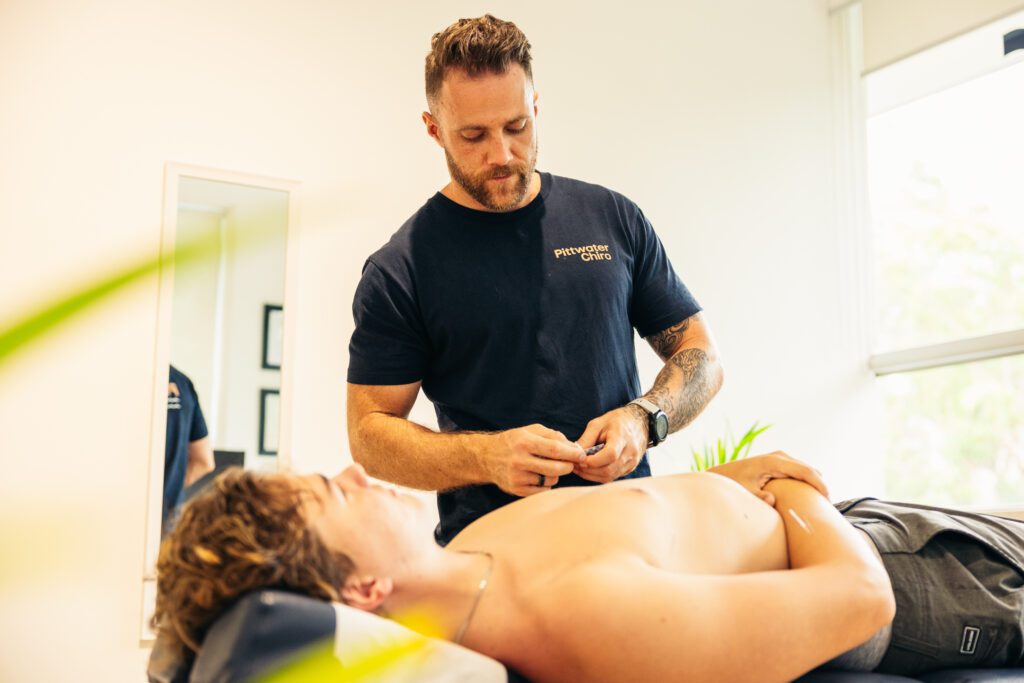
Pain is a complex and subjective experience that can greatly impact our daily lives. Whether the pain is acute or chronic, we understand the mechanisms of pain, which helps us to effectively manage pain. One prominent theory is the Pain Gate Theory or Gate Control Theory of Pain. This theory proposes that pain perception is not solely determined by the intensity of a noxious stimulus (this is something that’s caused you pain, i.e., you’ve scraped your knee on a rock, or you’ve burnt your hand), but is changed by aspects of the nervous system which control the ‘gating’ of pain signals being sent to the spinal cord and up into the brain. To understand the pain gate theory, let’s imagine a “gate” in the spinal cord that controls the transmission of pain signals to the brain. This gate may open or close and will determine if these pain signals can travel up to our brain to reach our conscious awareness. Let’s look at the mechanisms: Activation of nociceptors When any type of tissue damage or injury occurs, nerve endings that are responsible for feeling pain are activated, these are called nociceptors. These nociceptors play an important role as they help us to reflexively remove ourselves from a dangerous situation that may cause us damage, for example, if you put your hand over a flame, you instinctively will pull it away. Transmission of pain signals The activated nociceptors send signals through nerve fibres to a section of the spinal cord, where they are transmitted to the brain for processing. This is a sort of filing system that allocates them to the ‘pain’ section of information to be sent up to the brain via the spinal cord. The gate mechanism Once these signals reach this section of the spinal cord, the gate mechanism has its moment. The gate consists of inhibitory and excitatory neurons, which regulate the flow of pain signals. This means they can either inhibit (or dampen) the pain signals or they can excite (or amplify) the pain signals. When the gate is closed, then the inhibitory signals dampen pain transmission and reduce our perception of pain. Conversely, when the gate is open, the excitatory signals can travel up to our brain through the gate, and we are made much more aware of the intensity of the pain. Influence of modulating factors The opening or closing of the gate is influenced by various factors, including psychological, emotional, and cognitive factors. One easy example is the use of mechanoreceptors. These are also nerve endings, but they’re responsible for the perception of touch and pressure which isn’t painful. These fibres can travel to our spinal cord much quicker than our pain signals are and can compete to take the space which essentially closes the gate, dampening the pain. That’s why it normally feels better if we rub or put pressure on an area that we’ve just injured. Other techniques may be used to calm our conscious awareness of pain, these can include distraction techniques, relaxation exercises or positive emotions, all of which will help to close the gate. Conversely, stress, anxiety, or negative emotions can open the gate, increasing pain sensitivity. How is this used in the clinic? Many of the techniques used in our clinic stimulate the skin and activate non-painful sensory fibres, our mechanoreceptors. As mentioned above, stimulating these nerve fibres will help close the gate and reduce pain perception. Additionally, our practitioners take the time to listen to you and your pain story, creating a space where you can relax and reframe your perception of pain, so that it is less catastrophic and more of an optimistic approach. We understand how debilitating pain can be when it interferes with your life, and we can reassure you that pain does not last forever. The pain gate theory offers valuable insight into the complex nature of pain perception. When we understand how the gate mechanism operates and the factors that influence it, we can develop comprehensive pain management strategies.
