
Why exercise rehab is important
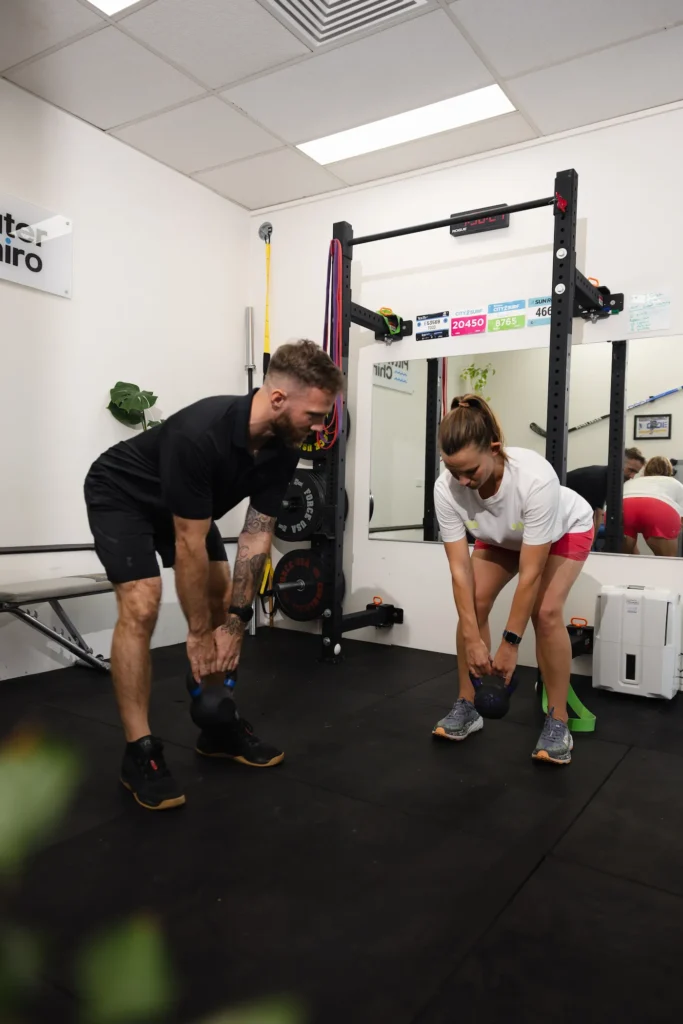
Exercise rehabilitation or rehab is a personalised approach to recovery, prescribed to every patient at Pittwater Chiro. Exercise rehab is the restoration of optimal form and function. When recovering from an injury or surgery, targeted exercises are prescribed to get your body moving to recover from injury and ensure that you can do all your daily activities. In addition, studies show that when exercise is combined with manual therapy (hands-on treatment), patients are more likely to recover from pain at a quicker rate and with a reduced chance of re-injury. Exercise rehab is a range of exercise techniques, formulated for the specific injury and the needs and limitations of the individual. These exercise techniques can be focused on improving range of motion, balance, coordination, flexibility, strength or functional movement patterns. Research suggests that exercise rehab can be beneficial for pain and/or injuries, such as neck pain, low back pain, ankle sprains, hamstring injuries, shoulder injuries and knee injuries. The benefits of exercise rehabilitation Improved strength and stability Improved flexibility and range of motion Decreased pain levels via release of endorphins (the body’s natural painkillers) Prevention of injury recurrence Improved proprioception, and subsequently improved balance and coordination. Improved psychological well-being Increased recovery rates Important components of a exercise rehab program Assessment Allied health professionals i.e. chiropractors, physiotherapists, and exercise physiologists, should be the only practitioners that provide you with an exercise rehab program. A professional will be able to effectively assess and understand the nature and extent of your injury, your current health status and the specific needs of you as an individual to recover from the current condition. Tailored programs Building on the above-mentioned point, a tailored program is useful when recovering from injuries or chronic pain conditions. We’re all different, and every human body has different strengths and limitations. If you start a program with too many exercises or a weight that is too heavy for you, you will set yourself up for re-injury. If you progress through your program too slowly, your body won’t continue to strengthen, again increasing the risk of re-injury. This is why it is important to have a health professional monitor your progress ensuring that you are safely improving at the right pace. Progressive overload That brings me to my next point. Progressive overload is a concept widely used but often poorly executed. It’s pretty normal to get excited about an exercise or the feeling that you’re getting back to your pre-injury activity levels. This enthusiasm can make you go from 0 – 100 real quick which can result in re-injury. The progressive overload principle involves gradually increasing the intensity or load over time to continually challenge your muscles, and promote growth and adaptation. The idea is to push your body slightly beyond its current capacity during each workout, forcing it to adapt by becoming stronger, more endurance-oriented, or more flexible. It’s essential to implement progressive overload cautiously and gradually to minimise the risk of injuries and allow for proper recovery. Functional movements While this can be a bit of a buzzword, exercises within a rehab plan should aim to mimic the functional movement patterns you do as an individual. This could be simple activities of daily living, such as getting up from a chair, or can be more sport-specific such as rotational movements. The goal of these exercises is to build confidence in your abilities to complete these activities pain-free. Conclusion Exercise rehabilitation is a transformative journey that goes beyond physical recovery. It empowers individuals to actively participate in their healing process, fostering a sense of control and resilience. Always consult with health professionals to develop a personalised exercise rehab plan that suits your specific needs and circumstances. For more information on the type of exercise rehab used at Pittwater Chiro, read Jess’s blog on Dynamic Neuromuscular Stabilization. References Frontera WR. Rehabilitation of Sports Injuries: Scientific Basis. Vol X of Encylopaedia of Sports Medicine. An IOC Medical Comittee Publication in collaboration with the International Federation of Sports Medicine. Blackwell Science Ltd. 2003 Mintken PE, McDevitt AW, Cleland JA, Boyles RE, Beardslee AR, Burns SA, et al. Cervicothoracic Manual Therapy Plus Exercise Therapy Versus Exercise Therapy Alone in the Management of Individuals With Shoulder Pain: A Multicenter Randomized Controlled Trial. The journal of orthopaedic and sports physical therapy. 2016;46(8):617–28. Brody LThein, Hall CM. Therapeutic exercise moving toward function. 3rd ed. Philadelphia: Wolters Kluwer/Lippincott Williams & Wilkins Health; 2011. Fredin K, Lorås H. Manual therapy, exercise therapy or combined treatment in the management of adult neck pain – A systematic review and meta-analysis. Musculoskeletal science & practice. 2017;31:62–71. Chris MB, Jeffrey BT, Dischiavi SL, Doherty C, Delahunt E. Rehabilitation Exercises Reduce Reinjury Post Ankle Sprain, But the Content and Parameters of an Optimal Exercise Program Have Yet to Be Established: A Systematic Review and Meta-analysis. Archives of Physical Medicine and Rehabilitation, 2019;100(7):1367-1375. Rainville J, Hartigan C, Martinez E, Limke J, Jouve C, Finno M. Exercise as a treatment for chronic low back pain. The Spine Journal, 2004;4(1):106-115.
The New Standard of Stretching

Stretching is a crucial component of any exercise routine, but not all stretches are created equal. For years, static stretching was the go-to warm-up before a workout. However, recent research and evolving fitness practices have shifted the focus towards dynamic stretching as a more effective and safer way to prepare your body for physical activity. In this blog post, we’ll explore why static stretching before a workout may not be the best choice and why dynamic stretching is a superior alternative. For more information on other ways to prevent injury, read our blog on the Bucket Analogy. Static Stretching: The Old Approach Static stretching involves holding a stretch in a fixed position for an extended period, usually around 15-30 seconds. While static stretching does have its benefits, it might not be the ideal choice for a pre-workout routine. Here’s why: Reduced Muscle Power: Studies have shown that static stretching before a workout can temporarily reduce muscle strength and power. This is not ideal if you’re about to engage in activities that require explosive movements, such as sprinting or weightlifting. Increased Risk of Injury: Stretching a cold muscle can lead to overstretching or straining, increasing the risk of injury. Static stretching can create a false sense of flexibility, which may lead to poor body mechanics during exercise. Delayed Muscle Activation: Static stretching may delay the activation of the muscles you’re about to use in your workout. This can impact your performance and potentially compromise your form, leading to injury. Dynamic Stretching: The New Standard Dynamic stretching, on the other hand, involves active movements that take your body through a full range of motion. It’s become the preferred choice for warming up before exercise, and here’s why: Enhanced Blood Flow: Dynamic stretching increases blood flow to your muscles, which helps raise your body temperature and prepares your cardiovascular system for the upcoming workout. Improved Flexibility: By taking the joints and muscles through their range of motion, you still get the benefit of flexibility, without the risk of injuring during your workout. Muscle Activation: Dynamic stretching activates the muscles you’ll be using during your workout. This primes them for action and helps you maintain proper form throughout your exercise routine. Injury Prevention: By mimicking the movements you’ll perform during your workout, dynamic stretching helps reinforce proper mechanics and reduces the risk of injury. Sample Dynamic Stretches Leg Swings: Stand next to a support, like a wall, and swing one leg forward and backward in a controlled manner. Repeat for both legs. Arm Circles: Extend your arms to the sides and make small circles, gradually increasing their size. Reverse the direction. Hip Rotations: Stand with your feet shoulder-width apart and rotate your hips in a circular motion, clockwise and counterclockwise. Walking Lunges: Take a step forward into a lunge, then push off your front foot and step into the next lunge. Continue for several steps. High Knees: March in place, lifting your knees as high as possible with each step. Incorporating dynamic stretching into your pre-workout routine is a smart choice for anyone looking to enhance their performance, reduce the risk of injury, and improve flexibility. While static stretching still has its place, it’s best reserved for post-workout cool-downs when your muscles are warm and pliable. Make the switch to dynamic stretching, and you’ll be better prepared to tackle your workouts with strength, flexibility, and confidence. By Dr Jess Milsom (B.Chiro Sc, M.Chiropractic)
