
Navigating a New Episode of Low Back Pain

Are you experiencing a flare-up or a new episode of low back pain? Here’s how to navigate it. Low back pain (LBP) is a prevalent condition, often causing discomfort and disruption to daily life. Understanding the best practices for managing LBP is essential for achieving effective relief and preventing further complications. Using clinical practice guidelines, this blog aims to provide actionable advice for when you experience LBP. Before we go any further, it’s important to seek help from a professional when you experience a new episode of pain or intense pain, to determine the need for immediate medical relief. This blog post is targeted to ‘non-specific low back pain’, which is pain that does not have a known patho-anatomical cause. In other words: not caused by serious conditions such as a tumour, infection, spinal cord compression, etc. So with that in mind, let’s discuss how to manage it and when it’s appropriate to see a chiropractor! How you can manage a new episode of back pain by yourself: Avoid bed rest: Most research advises against prolonged bed rest for acute LBP, recommending maintaining normal activities to promote healing. Medication and superficial heat: Nonsteroidal anti-inflammatory drugs (NSAIDs) are commonly recommended for pain relief, e.g. neurofen (ibuprofen). It’s important to read the label when taking these drugs and consult with the pharmacist to ensure they are right for you. Additionally, heat packs or heat creams can help when experiencing an acute episode of low back pain. For more information on the different medications for back pain read Jess’s blog – medications for low back pain. Exercise Therapy: Exercise is universally endorsed, particularly for chronic LBP, although the type and delivery mode may vary. The recommended exercise varies from person to person, but generally speaking, while suffering from a painful episode of low back pain, gentler exercises will be more beneficial. For example, light swimming, walking, or pilates. Psychosocial Strategies: Cognitive-behavioral therapy (CBT) is widely recommended, addressing psychosocial factors that may contribute to LBP. Generally, CBT strategies are performed by a psychologist and are useful if you frequently suffer from low back pain episodes. Alongside that, regular mindfulness practice is encouraged to decrease the intensity and frequency of back pain. How can a chiropractor help you if you experience a new episode of low back pain? If symptoms persist or worsen, consider consulting a healthcare provider within the first 1 – 2 weeks of the pain for further evaluation and personalised treatment recommendations. Chiropractors can develop individualised exercise programs and provide hands-on interventions to address pain and promote recovery. Additionally, research shows the significance of receiving reassurance from a professional that improvement is achievable while experiencing low back pain. Chiropractors can also discuss with you the strategies that will be most effective when managing the pain at home or outside of the clinic. For chronic LBP, multidisciplinary rehabilitation may be beneficial, involving a coordinated approach with various healthcare professionals. Chiropractors can offer referrals to specialists if you need to look at other options. However invasive treatments such as injections or surgery are generally discouraged unless conservative measures have been ineffective, and specific criteria are met. Long-term management and prevention of back pain Once you have managed to settle down the pain it’s good to implement long-term strategies to avoid another flare-up. Some simple ways include: Lifestyle modifications: Regularly change the position you’re in – making sure you’re not staying in the same position for too long e.g. sitting or standing for too long, engage in regular exercise, and manage stress to reduce the risk of recurrent LBP episodes. Education and self-management: Research shows that when you understand how pain is perceived in the body you are less likely to catastrophise a flare-up, subsequently decreasing the intensity and duration of that flare-up. Empower yourself with knowledge about LBP management strategies and adopt self-management techniques to address symptoms proactively. If you regularly get pain flare-ups have a look at Lorimer Moseley’s Ted talk on YouTube called “Why Things Hurt”. Regular follow-ups with healthcare providers such as chiropractors can help monitor progress, adjust treatment plans as needed, and address any new concerns or symptoms. Experiencing low back pain can be challenging, but with the right approach, relief and recovery are achievable. By adhering to evidence-based recommendations such as those discussed in this blog, individuals can navigate LBP with confidence and take proactive steps towards improved health and well-being. Remember, you are not alone in your journey, and there are resources and healthcare professionals available to support you every step of the way. Stay informed, stay proactive, and prioritize your health for a brighter, pain-free future. References: Oliveira CB, Maher CG, Pinto RZ, Traeger AC, Lin CC, Chenot JF, van Tulder M, Koes BW. Clinical practice guidelines for the management of non-specific low back pain in primary care: an updated overview. Eur Spine J. 2018 Nov;27(11):2791-2803. doi: 10.1007/s00586-018-5673-2. Epub 2018 Jul 3. PMID: 29971708. Chou R, Côté P, Randhawa K, Torres P, Yu H, Nordin M, Hurwitz EL, Haldeman S, Cedraschi C. The Global Spine Care Initiative: applying evidence-based guidelines on the non-invasive management of back and neck pain to low- and middle-income communities. Eur Spine J. 2018 Sep;27(Suppl 6):851-860. doi: 10.1007/s00586-017-5433-8. Epub 2018 Feb 19. PMID: 29460009. Ladeira CE. Evidence based practice guidelines for management of low back pain: physical therapy implications. Rev Bras Fisioter. 2011 May-Jun;15(3):190-9. doi: 10.1590/s1413-35552011000300004. PMID: 21829982. Wong JJ, Côté P, Sutton DA, Randhawa K, Yu H, Varatharajan S, Goldgrub R, Nordin M, Gross DP, Shearer HM, Carroll LJ, Stern PJ, Ameis A, Southerst D, Mior S, Stupar M, Varatharajan T, Taylor-Vaisey A. Clinical practice guidelines for the noninvasive management of low back pain: A systematic review by the Ontario Protocol for Traffic Injury Management (OPTIMa) Collaboration. Eur J Pain. 2017 Feb;21(2):201-216. doi: 10.1002/ejp.931. Epub 2016 Oct 6. PMID: 27712027. Lorimer Moseley G, Leake HB, Beetsma AJ, Watson JA, Butler DS, van der Mee A, Stinson JN, Harvie D, Palermo TM, Meeus M, Ryan CG. Teaching Patients About Pain: The Emergence
Why exercise rehab is important
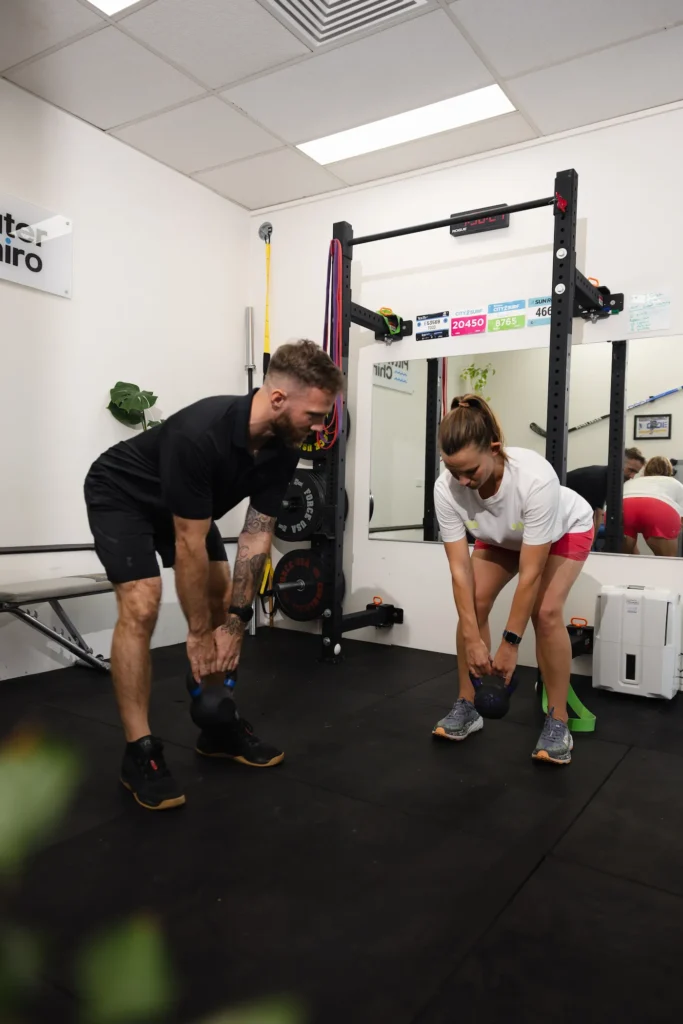
Exercise rehabilitation or rehab is a personalised approach to recovery, prescribed to every patient at Pittwater Chiro. Exercise rehab is the restoration of optimal form and function. When recovering from an injury or surgery, targeted exercises are prescribed to get your body moving to recover from injury and ensure that you can do all your daily activities. In addition, studies show that when exercise is combined with manual therapy (hands-on treatment), patients are more likely to recover from pain at a quicker rate and with a reduced chance of re-injury. Exercise rehab is a range of exercise techniques, formulated for the specific injury and the needs and limitations of the individual. These exercise techniques can be focused on improving range of motion, balance, coordination, flexibility, strength or functional movement patterns. Research suggests that exercise rehab can be beneficial for pain and/or injuries, such as neck pain, low back pain, ankle sprains, hamstring injuries, shoulder injuries and knee injuries. The benefits of exercise rehabilitation Improved strength and stability Improved flexibility and range of motion Decreased pain levels via release of endorphins (the body’s natural painkillers) Prevention of injury recurrence Improved proprioception, and subsequently improved balance and coordination. Improved psychological well-being Increased recovery rates Important components of a exercise rehab program Assessment Allied health professionals i.e. chiropractors, physiotherapists, and exercise physiologists, should be the only practitioners that provide you with an exercise rehab program. A professional will be able to effectively assess and understand the nature and extent of your injury, your current health status and the specific needs of you as an individual to recover from the current condition. Tailored programs Building on the above-mentioned point, a tailored program is useful when recovering from injuries or chronic pain conditions. We’re all different, and every human body has different strengths and limitations. If you start a program with too many exercises or a weight that is too heavy for you, you will set yourself up for re-injury. If you progress through your program too slowly, your body won’t continue to strengthen, again increasing the risk of re-injury. This is why it is important to have a health professional monitor your progress ensuring that you are safely improving at the right pace. Progressive overload That brings me to my next point. Progressive overload is a concept widely used but often poorly executed. It’s pretty normal to get excited about an exercise or the feeling that you’re getting back to your pre-injury activity levels. This enthusiasm can make you go from 0 – 100 real quick which can result in re-injury. The progressive overload principle involves gradually increasing the intensity or load over time to continually challenge your muscles, and promote growth and adaptation. The idea is to push your body slightly beyond its current capacity during each workout, forcing it to adapt by becoming stronger, more endurance-oriented, or more flexible. It’s essential to implement progressive overload cautiously and gradually to minimise the risk of injuries and allow for proper recovery. Functional movements While this can be a bit of a buzzword, exercises within a rehab plan should aim to mimic the functional movement patterns you do as an individual. This could be simple activities of daily living, such as getting up from a chair, or can be more sport-specific such as rotational movements. The goal of these exercises is to build confidence in your abilities to complete these activities pain-free. Conclusion Exercise rehabilitation is a transformative journey that goes beyond physical recovery. It empowers individuals to actively participate in their healing process, fostering a sense of control and resilience. Always consult with health professionals to develop a personalised exercise rehab plan that suits your specific needs and circumstances. For more information on the type of exercise rehab used at Pittwater Chiro, read Jess’s blog on Dynamic Neuromuscular Stabilization. References Frontera WR. Rehabilitation of Sports Injuries: Scientific Basis. Vol X of Encylopaedia of Sports Medicine. An IOC Medical Comittee Publication in collaboration with the International Federation of Sports Medicine. Blackwell Science Ltd. 2003 Mintken PE, McDevitt AW, Cleland JA, Boyles RE, Beardslee AR, Burns SA, et al. Cervicothoracic Manual Therapy Plus Exercise Therapy Versus Exercise Therapy Alone in the Management of Individuals With Shoulder Pain: A Multicenter Randomized Controlled Trial. The journal of orthopaedic and sports physical therapy. 2016;46(8):617–28. Brody LThein, Hall CM. Therapeutic exercise moving toward function. 3rd ed. Philadelphia: Wolters Kluwer/Lippincott Williams & Wilkins Health; 2011. Fredin K, Lorås H. Manual therapy, exercise therapy or combined treatment in the management of adult neck pain – A systematic review and meta-analysis. Musculoskeletal science & practice. 2017;31:62–71. Chris MB, Jeffrey BT, Dischiavi SL, Doherty C, Delahunt E. Rehabilitation Exercises Reduce Reinjury Post Ankle Sprain, But the Content and Parameters of an Optimal Exercise Program Have Yet to Be Established: A Systematic Review and Meta-analysis. Archives of Physical Medicine and Rehabilitation, 2019;100(7):1367-1375. Rainville J, Hartigan C, Martinez E, Limke J, Jouve C, Finno M. Exercise as a treatment for chronic low back pain. The Spine Journal, 2004;4(1):106-115.
