
Rethinking core training: more than planks and crunches
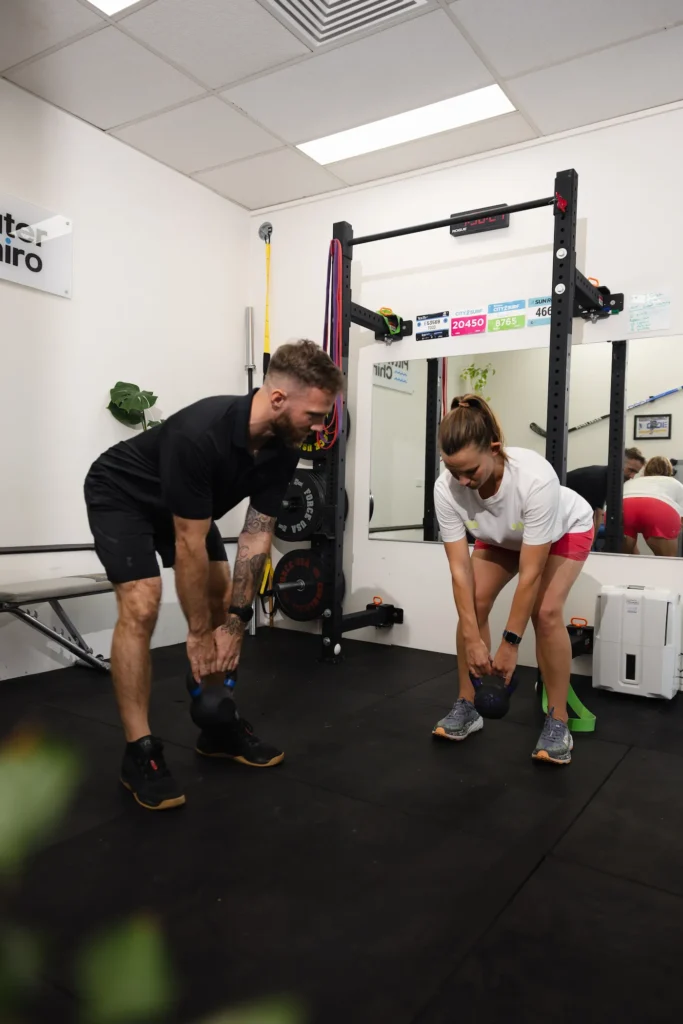
“Strengthen your core” is advice we hear everywhere, but why is core strength important, and what does having a strong core actually mean? Core strength is often associated with visible abdominal muscles or being able to hold a plank for a long time. In reality, your core plays a much broader role. The muscles of your trunk help create stability around the spine and pelvis, allowing your body to control movement, transfer force, and respond to the physical demands of everyday life, exercise and sport. What is your core and what does it do? Your core is not just your abs. It is a group of muscles that work together, connecting your pelvis to your lower ribs like a muscular cylinder. It includes your abdominal muscles, diaphragm, quadratus lumborum, erector spinae, pelvic floor and other smaller muscles surrounding your spine and pelvis. These muscles work together to control the position and movement of the trunk, particularly when the arms and legs are moving. When you pick up a heavy object, your arms and legs do most of the work. The core muscles, however, must maintain the stability of the torso to transfer the force. This is one of the main functions of the core. Core strength and spinal stability The spine is designed to move. Spinal stability does not mean keeping your spine completely still or maintaining one “perfect” posture. Instead, stability is the ability to control movement and resist unwanted movement when a force is applied. Your spine is supported by passive structures such as bones, joints, discs, and ligaments, as well as active muscular support and the nervous system. Your muscles don’t simply switch on to “hold your spine in place”. They constantly adjust their activity depending on what you are doing. For example, carrying a heavy bag on your left side creates a force that could pull your trunk towards the bag. Your nervous system responds by activating the muscles on the right side of your body to contract, maintaining a straight spine. The same principle applies when you run, jump, lift, reach or rotate. Good core function therefore isn’t about being rigid. It is about being able to control movement while still allowing movement to occur. Why is core strength important? A strong and well-coordinated core can help you: What does core strength actually look like? It isn’t necessarily the person who can hold a plank for five minutes. Core strength is task-specific. Someone might have excellent endurance in a plank but struggle to maintain control when carrying a heavy object, rotating or moving quickly. This is why core training shouldn’t be limited to exercises performed on the floor. My perspective on core training has changed When I was younger, I definitely thought core strength was mostly about doing crunches, planks and trying to get visible abs. There is absolutely nothing wrong with that. I still love a good mat Pilates class, and there is something very satisfying about a set of abdominal exercises that leaves your core burning. But as I’ve learned more about movement, I’ve become much more interested in how we use our core outside of those traditional exercises. Now, I tend to focus more on functional core strength and the ability to maintain control while the rest of the body is moving. That might look like balancing on one leg while reaching in different directions, performing a single-leg squat, carrying a weight on one side of the body, doing an exercise with an unstable base of support, or controlling a movement where the arms or legs are moving independently. Even something as simple as standing on one leg while rotating your upper body challenges your ability to control your trunk while your centre of mass changes. Other examples include: These exercises don’t necessarily look like traditional “ab exercises”, but your core is working throughout them. Do you need to brace your core all the time? No. There is a time and place for bracing, particularly when lifting heavy loads or performing a movement where you need a high level of trunk stiffness. But maintaining a maximal abdominal brace throughout the day is not the goal of good core function. Your trunk needs to be able to adapt. When you walk, breathe, reach overhead, rotate or sit down, your muscles are constantly changing their level of activity. Stability comes from this ability to respond to changing demands, not from keeping everything switched on at maximum effort. How to improve your core strength? Start by considering what you actually need your core to do. If your goal is general strength, exercises such as dead bugs, side planks, carries, squats, deadlifts and controlled rotational movements can all be useful. From there, you can gradually make the challenge more functional by introducing single-limb exercises, changes in balance, external loads, different positions or movements that require your trunk to respond while your arms and legs move. The key is progressive overload. Just like any other muscle group, your core needs an appropriate challenge to become stronger. This could mean increasing resistance, repetitions, range of motion, exercise complexity or the amount of time you can maintain good control. You also don’t need to train your core every day. Your trunk is already working during many of the exercises you perform throughout the week. Core strength: the bigger picture Core strength is not about creating a rigid spine or achieving a perfect posture. It is about having enough strength, endurance and coordination to control your trunk while allowing the rest of your body to move. A strong core gives you a better foundation for everyday activities, exercise and sport. More importantly, it allows your body to respond to different loads and movements rather than relying on one fixed position. The goal isn’t to stop your spine from moving. The goal is to give it the capacity and control to move well.
Why everyone should practise their balance

When I ask patients if they ever practise their balance, I usually get the same response: “Isn’t balance something you only worry about when you’re older?” Not at all. Balance is one of the most underrated forms of exercise. We spend hours trying to get stronger, stretch more, or improve our fitness, yet most of us never stop to train one of the most fundamental skills our body has. The funny thing is, your balance quietly influences almost everything you do. Every step you take, every time you climb stairs, hike, run, dance, play sport, or simply stand on one leg to put your shoes on, your brain is constantly making tiny adjustments to keep you upright. The better that system works, the more confidently and efficiently your body moves. Ready for a challenge? Before you keep reading, I’d love you to try this. Stand on one leg with your arms by your sides. No hopping. No waving your arms. Just stand. Can you hold it for one minute? Most healthy adults should be aiming to comfortably reach around one minute on each leg, yet many people are surprised by how difficult it is. Now swap legs. Did one side feel easier? Now, if you’re confident with your balance, try it again with your eyes closed.(Please skip this challenge if you already struggle with balance, have dizziness, or don’t feel steady on your feet.) It’s amazing how quickly things change. Closing your eyes removes one of your biggest sources of information about where your body is in space. Suddenly your brain has to rely much more on your inner ear and the thousands of sensory receptors in your feet, joints, muscles, and fascia to keep you upright. It’s a reminder that balance isn’t just about your legs, it’s your entire nervous system working together. Why should younger people practise their balance? If you’re young, it’s easy to think balance isn’t relevant yet. I’d actually argue it’s one of the best things you can train. Balance teaches your body how to move efficiently. It improves coordination, body awareness, reaction time, and control. These are the foundations of almost every sport and every form of exercise. But for me, the benefits go far beyond performance. One of the things I love most about balance training is that it forces me to slow down. You can’t scroll your phone while balancing on one leg. You can’t think about ten different things at once. For those 30 or 60 seconds, your attention comes back to your body. You notice your breathing. You notice your feet gripping the floor. You notice tiny muscles switching on that you didn’t even realise existed. In a world where we’re constantly distracted, I think that’s pretty special. Balance training makes you feel connected As a chiropractor, I’m fascinated by how connected the body really is. When I’m balancing on one leg, I can actually feel my whole body working together. My foot gently grips the floor. My arch lifts. My calf switches on. My glutes wake up. My core tightens without me thinking about it. Everything is communicating. One area that I find particularly interesting is the plantar fascia—the strong band of connective tissue on the bottom of your foot. When your foot is actively supporting you, tension travels through the body’s fascial system. You may notice your calf, hamstrings, glutes, and deep core naturally becoming more engaged as they work together to keep you stable. Fascia isn’t just something that wraps around muscles. It’s rich in sensory receptors that help your brain understand where your body is in space. Every time you challenge your balance, you’re training this communication system just as much as you’re training your muscles. Instead of thinking about individual muscles working in isolation, balance reminds us that the body functions as one integrated unit. Strength through stability When people think about getting stronger, they often picture lifting heavier weights. That’s definitely one way to build strength. But balance gives you a different kind of strength. It gives you stability.It gives you confidence in your body.It gives you the feeling that your body can react quickly, adapt, and support you no matter what life throws at it. Personally, that’s one of my favourite feelings. Make it a game The best part about balance training is that it doesn’t need to feel like another workout. You can make it as relaxing or as challenging as you like. Try balancing while: Experiment with different positions. Hold a yoga pose like Tree Pose or Warrior III, or create your own fun balance challenges. The more your body has to adapt, the more your coordination, stability, and body awareness improve. See if you can beat your own time. Challenge a friend. Notice whether one side improves over a few weeks. Treat it like a game rather than another item on your to-do list. My take Balance is one of those things we rarely think about until we begin to lose it. It’s a bit like your eyesight or your hearing. We tend to take it for granted because it’s always there, quietly working in the background. But the moment it starts to decline, everyday tasks suddenly become much more challenging. The good news is that balance is a skill. Like strength, flexibility, or fitness, it responds to practice. The more you challenge it, the better your brain and body learn to work together. So don’t wait until balance becomes something you have to work on. Work on it while you’re young. Challenge it. Play with it. Push your limits safely. See how long you can balance, try new positions, and notice how your body adapts over time. You might be surprised to discover that improving your balance doesn’t just help you move better, but it helps you become more connected to your body, more aware of how you move, and more confident in what your body is capable of. After all, one of the best investments you can
Dry Needling: What is it and how can it help?

One of the questions I get asked most in clinic is, “What exactly is dry needling?” For many people, the thought of needles can sound intimidating, but once they understand how it works and experience the benefits, it’s often one of their favourite treatments. It involves inserting a fine, sterile, single-use needle into tight muscles or myofascial trigger points; which are those stubborn “muscle knots” that can develop after injury, repetitive movements, poor posture, or even stress. How does dry needling work? One of the most interesting parts of dry needling is something called a local twitch response. When the needle reaches a trigger point, it may cause a brief, involuntary contraction of a small group of muscle fibres. This happens because the needle stimulates sensitive nerve endings and muscle fibres within the trigger point, creating a reflex through the spinal cord. It’s not something you can control, and not every muscle will twitch. Patients often ask me whether the twitch means the treatment is “working.” While a twitch can be a really positive sign that we’ve targeted an irritable trigger point, it isn’t essential for dry needling to be effective. The twitch itself doesn’t relax the muscle. Instead, it’s thought to help interrupt the abnormal cycle of sustained muscle contraction that occurs within a trigger point. Following this response: Contracted muscle fibres can return closer to their normal resting length. Local blood flow improves, delivering oxygen and nutrients while helping remove metabolic waste. Pain-producing chemicals within the muscle are reduced. The muscle often relaxes, resulting in less pain and improved movement. Beyond the twitch response, dry needling also influences how the nervous system processes pain. This is one of the reasons many patients notice they can move more freely or comfortably following treatment. What are the benefits of dry needling? While every patient responds differently, some of the most common benefits I see in clinic include: Reduced muscle tightness and pain. Improved flexibility and range of motion. Reduced muscle spasms. Better muscle function and movement. Faster recovery after training or injury. Relief from tension headaches and certain types of neck pain. Improved outcomes when combined with chiropractic adjustments, soft tissue therapy, and rehabilitation exercises. Dry needling isn’t a “quick fix,” but when it’s used as part of a comprehensive treatment plan, it can be an incredibly effective tool for helping people move and feel better. Who can benefit? I commonly use dry needling with patients experiencing: Neck and back pain. Shoulder pain and restricted movement. Hip and gluteal pain. Sports injuries. Muscle strains. Tennis or golfer’s elbow. Jaw muscle tension (TMJ-related pain). Tension headaches and cervicogenic headaches. Persistent muscle tightness and trigger points. Reduced mobility caused by muscular stiffness. Whether you’re an office worker with tight shoulders, a runner with stubborn calf tightness, a swimmer with posterior shoulder tension, or simply someone dealing with ongoing muscular pain, dry needling may be an appropriate addition to your treatment plan. Is dry needling safe? Dry needling is considered a safe procedure when performed by a trained healthcare professional using sterile, single-use needles. Before treatment, I always take a thorough health history to make sure it’s appropriate for you. Contraindications Dry needling isn’t suitable in some situations, including: Over areas of active infection, open wounds, or compromised skin. In areas affected by active lymphoedema. Severe needle phobia that makes treatment unsafe. Certain medical conditions that require urgent medical management. Precautions Additional care may be required if you: What should I expect afterwards? It’s completely normal to feel some muscle soreness after dry needling. Many people describe it as feeling similar to the soreness you get after a workout. This usually settles within 24 to 48 hours. Some patients feel immediate relief after treatment, while others notice gradual improvement over the following day or two. Everyone responds a little differently, depending on the condition being treated. To help you get the most out of your treatment, I usually recommend: If you experience severe pain, increasing swelling, chest pain, difficulty breathing, fever, or any symptoms that concern you after treatment, seek medical attention promptly and let your practitioner know. My approach to Dry Needling I don’t see dry needling as a stand-alone treatment. While it can be incredibly effective at reducing muscle tension and pain, the best long-term results come from identifying why the problem developed in the first place. That’s why I often combine dry needling with chiropractic adjustments, soft tissue therapy, mobility work, strengthening exercises, and advice tailored to your lifestyle and goals. My aim isn’t just to help you feel better for a day, it’s to help you move better, recover well, and stay doing the activities you enjoy.
Sacroiliac joint pain during pregnancy: why your pelvis hurts and what can help

Pregnancy is one of the most extraordinary things the human body can do, and your pelvis knows it better than anyone. As a women’s health chiropractor, one of the most common conversations I have with my pregnant patients is “I didn’t expect my hips and pelvis to hurt this much.” So let’s talk about the sacroiliac joint (SIJ), hormones, and why so many pregnant women experience pelvic pain — and what we can do about it! What is the sacroiliac joint? The sacroiliac joint connects your sacrum (the triangular bone at the base of your spine) to your ilium (the large wing-shaped bones of your pelvis). It’s a stable joint by design. In its normal, non-pregnant state, the SIJ relies on a combination of bony compression and strong surrounding ligaments to keep it steady under the significant forces we place on it every day, such as walking, lifting, bending, and everything in between. This stability comes from two mechanisms: Both are essential. And during pregnancy, both can be challenged by several factors. How relaxin and progesterone affect the pregnancy ligaments Here’s where it gets fascinating, and for many women, where the discomfort starts. During pregnancy the body is releasing two key hormones: relaxin and progesterone. These hormones serve a powerful role, they soften and increase the extensibility of collagen-rich tissues throughout the body, particularly ligaments and smooth muscle. The goal is to allow the pelvis to gradually expand and accommodate growing bub, and ultimately, to open more readily during birth. But here’s the trade-off: those same ligaments that are becoming more lax are also the ones responsible for maintaining force closure at the SIJ. As the ligaments around the joint become lax, they lose their ability to generate sufficient tension to hold the joint securely — particularly during dynamic movement like walking, climbing stairs, or rolling over in bed (something my patients often tell me has become surprisingly painful). Research consistently links elevated relaxin levels to hypermobility at the SIJ during pregnancy, and this reduced force closure is a significant contributor to pelvic instability. How pregnancy changes your pelvic mechanics Alongside the hormonal changes, the physical demands of pregnancy also alter the mechanics of the pelvis, that place additional strain on the SIJ ligaments. As pregnancy progresses and the belly grows, the lumbar spine typically increases its curve (lordosis), which causes the sacrum to tip forward into what we call nutation. This is a normal and necessary adaptation — but it increases tension on the posterior SIJ ligaments, which are the primary structures resisting that forward sacral movement. Over time, sustained or excessive loading of these ligaments can lead to instability or sprain. It’s a compounding effect: hormones soften the ligaments, posture loads them more heavily, and the cumulative result is a joint that’s struggling to do its job. Pregnancy-Related Pelvic Girdle Pain (PrPGP): Causes Pregnancy-related pelvic girdle pain (PrPGP) affects somewhere between 14 and 33% of pregnant women. What’s becoming increasingly clear is that SIJ instability during pregnancy is rarely caused by one single factor. It’s multifactorial, with contributions from: How chiropractic may help pregnancy-related SIJ pain Understanding the “why” behind pelvic pain in pregnancy changes the conversation from “this is just part of being pregnant” to “this is something we can work with.”As a women’s health chiropractor, my approach to SIJ-related pain during pregnancy focuses on several key areas: Your body is doing something extraordinary during pregnancy. The hormonal and structural changes that make pregnancy-related pelvic pain possible are the same ones that make birth possible. That doesn’t mean you have to simply endure the discomfort. Feel free to reach out if you have questions or would like to book an assessment.
I stretch but it does nothing!

You’re stretching regularly, doing all the “right” things, but somehow you still feel stiff. We see this all the time in the clinic. Someone will say, “I stretch every day, but my hamstrings still feel tight,” or “I’ve been doing mobility work, but my back still locks up.” And honestly, it can be really frustrating when you feel like you’re putting in the effort, but your body isn’t changing. A lot of people assume tight muscles simply need more stretching. But often, the issue isn’t that you’re not stretching enough. It’s that stretching alone isn’t addressing the bigger reasons your body is holding tension in the first place. Sometimes stiffness is less about one “short” muscle and more about your body asking for better recovery, more strength, more hydration, or a calmer nervous system. Let’s break it down. It’s not just “tight muscles”, it’s your whole system Muscle tightness isn’t only a local issue. It can be influenced by: This is why someone can stretch their hips every night and still feel tight the next morning. The stretch might give temporary relief, but if the underlying drivers are still there, the body often returns to the same protective pattern. So when tightness keeps coming back, it’s usually your body responding to something deeper than simply needing a longer stretch. Hydration and fascia health Your body is made up of roughly 60–70% water, and that matters more than most people realise when it comes to how “loose” or “stiff” you feel. Fascia is the connective tissue that surrounds and supports your muscles, joints, nerves, veins, arteries, bones and organs. It helps everything glide and move smoothly. When your fascia is well hydrated, it tends to be more elastic, responsive and adaptable. When it’s dehydrated, it can feel more sticky, stiff and restricted. This is one reason people can stretch and still feel tight again quickly. The issue may not just be the muscle itself, but the environment the muscle is sitting in. And hydration isn’t just about drinking more water. It’s also about fluid balance and electrolytes, which help your body actually absorb and use that water properly. Simple hydration upgrades: It sounds simple, but for a lot of people, improving hydration can make their body feel less “dry,” stiff and resistant to movement. Nervous system reset: why your body holds onto tightness If your nervous system is constantly switched on, your muscles will often stay lightly guarded, even if you’re stretching regularly. This is something we talk about a lot in the clinic. When life is busy, stressful or physically demanding, your body doesn’t always feel safe to fully relax. It prioritises protection over flexibility. That might show up as tight shoulders, a stiff lower back, guarded hips, or that general feeling of being tense all the time. A few simple ways to help down-regulate your system include: These small inputs signal to your body that it’s safe to let go of tension. For a deeper dive into this, you can also read our blog on regulating your nervous system. Let’s talk about length This is the piece most people are missing. Stretching can improve range of motion temporarily, but your body doesn’t always “keep” that range unless it feels strong and controlled there. That’s where strength through length comes in. Instead of just pulling a muscle longer, you’re training it to: A simple example is the difference between passively stretching your hamstring on the floor versus slowly lowering into a Romanian deadlift and controlling the length under load. Both can create a stretch sensation, but only one teaches your body that it is strong and safe in that range. When your nervous system trusts that you can control a position, it no longer needs to guard that area with tension. This is how flexibility becomes more sustainable rather than something you have to keep chasing every day. What strength through length looks like Rather than only stretching tight areas, we want to layer controlled strength into those same ranges of motion. This can be done through a mix of Pilates, yoga, mobility work and resistance training. Pilates and yoga Pilates and yoga can be excellent for building awareness, control and trust in your body. They can help you slow down, breathe, and move with more intention — which is often exactly what a tight, guarded body needs. Examples include: This is where you build awareness, coordination and nervous system control in range. Resistance Training Resistance training is where we build actual load tolerance and long-term change in tissue capacity. Examples include: The focus isn’t just on moving weight. It’s learning to control that weight through a full, lengthened range. That’s often the difference between feeling temporarily looser and actually building a body that feels more capable and resilient. A personal note As a former gymnast and someone who is very hypermobile, I’ve always had a lot of range in my body. Recently, I’ve noticed my body feeling quite stiff. Even though my range is still better than the average person, my body feels relatively stiff compared to my normal. At first, I blamed it on ageing, but the truth is I can’t do what I used to do, and I probably never will again. And I’ve realised it’s not just age. It’s that I’m not as strong as I used to be, I’m not as physically conditioned, and I have a lot more stress now (the reality of being an adult). As a naturally hypermobile person, I think my body has also started to compensate. Almost like it’s tightened up a little to protect me, because I don’t have the same strength and control I once had to support all that range. I don’t need to be the same athlete I was back then, but I do miss feeling light in my body and applying some of these tips has been a game-changer for me. The big picture If stretching hasn’t been working, it doesn’t mean your body
Understanding round ligament pain for expecting mums

One of the most common presentations I see when treating expecting mums is round ligament tension. This is often described as a sudden, sharp, shooting pain around the groin or lower abdomen that tends to last anywhere from a few seconds to a few hours. What is your round ligament? Your round ligaments are fibrous bands that support your uterus, extending from the front of your uterus through your groin area to the labia majora. Think of them like strong support cables for your growing uterus. In your non-pregnant state, these ligaments are relatively short and slack – doing their job quietly without much fuss. But during pregnancy? Everything changes. Why does it hurt so much? Your uterus grows from the size of a small pear to a watermelon over nine months. Those round ligaments have to stretch from about 10-12 centimetres to 50-60 centimeters in length. That’s more than five times their original length! Imagine stretching a rubber band to five times its resting length and holding it there for months. That’s essentially what your round ligaments are doing – and why they can be so sensitive. Hormones play their part During pregnancy, your body produces relaxin and progesterone – hormones designed to loosen your ligaments to prepare for childbirth. While this is brilliant preparation for delivery, it also makes your round ligaments more sensitive and prone to irritation. The sudden movement trigger When you move suddenly – standing up, rolling over, coughing, sneezing, even laughing – those already-stretched ligaments get an additional rapid pull. It’s like snapping that overstretched rubber band. The result? That sharp, stabbing sensation that stops you in your tracks. Why is it more common in the second trimester? Round ligament pain typically peaks during the second trimester, particularly between weeks 14 and 24. Here’s why: The rapid growth phase This is when your uterus is expanding most dramatically. Your baby is growing quickly, your uterus is rising out of your pelvis into your abdomen, and those round ligaments are stretching at their fastest rate. Think of it like growing pains during adolescence – the discomfort happens during the period of most rapid growth, not once you’ve reached your full height. The adaptation period By the third trimester, your round ligaments have typically adapted to their stretched position. The rate of growth slows, and your body has adjusted to the biomechanical changes. Many women find that their round ligament pain significantly improves or even disappears in the final months. How can chiropractic help? Having proper pelvic alignment balances round ligament tension. When your pelvis is aligned both ligaments experience equal supported tension, instead of one being pulled more than the other. In the clinic, I use a pregnancy-specific chiropractic approach that focuses on sacral alignment and pelvic balance. Treatment varies from a combination of muscle release, dry needling, joint mobilisations, gentle adjustments and targeted exercises/stretches to get you moving like yourself again. The techniques used are specifically designed for the pregnant body and have helped countless patients in our practice find relief. Postural support through pregnancy As your belly grows, your centre of gravity shifts forward. Your lower back curve increases to compensate, and this forward tilt increases the downward pull on your round ligaments. Chiropractic care helps improve overall posture and alignment, reducing that excessive anterior pelvic tilt that creates constant tension on your round ligaments. Movement education One of the most valuable things I do with patients is teach them how to move differently. Small changes can have huge impacts. For example: These tiny adjustments can change everything! What is our goal? When to seek help While round ligament pain is normal, there are times when pain requires immediate medical attention. I always tell my patients to trust their instincts. Seek medical care immediately if you experience: Your body is doing something incredible Those round ligaments that are causing you discomfort? They’re working overtime to support and protect your growing baby. The pain is real, the frustration is valid, and you don’t have to just “deal with it.” Gentle chiropractic techniques reduce inflammation, support your posture, and help you move comfortably throughout pregnancy. Think of pregnancy chiropractic care as giving your body the support it needs to do this incredible work without unnecessary suffering. Your next steps The pain is real, the frustration is valid, and you don’t have to just “deal with it.” Gentle chiropractic techniques reduce inflammation, support your posture, and help you move comfortably throughout pregnancy. At Pittwater Chiro, we regularly help expecting mums across Mona Vale, Balgowlah, and the Northern Beaches manage pregnancy-related discomfort like round ligament pain. Our pregnancy-specific chiropractic care focuses on gentle, safe techniques tailored to your body – book online.
99 reasons to exercise (and body image ain’t one)

Most people will experience some form of body insecurity at some point in their lives, and for some, it can run deeper, into patterns like body dysmorphia. So it’s no surprise that exercise often becomes tied to how we look. But if your only reason to exercise is how your body looks, motivation will come and go. But if your reason is: That’s something you can come back to every single day. So here are 99 reasons to exercise… and none of them have anything to do with body image. Why exercise matters more than ever Mental Benefits of Exercise Physical Benefits of Exercise Lifestyle Benefits of Exercise Final thoughts On a personal note, my relationship with exercise hasn’t always been perfect. When I was younger, I was motivated by getting stronger and performing better in sport. As I got older, that shifted, exercise became less about how I felt and more about appearance, which didn’t create a particularly healthy relationship with my body. Over time, I realised how much body weight and appearance can naturally fluctuate, and how unhelpful it was to be hard on myself during those times. It would only affect my mood, my motivation, and ultimately make it harder to stay consistent. When I shifted my focus back to things like strength, mental clarity, and how exercise made me feel day-to-day, it became much easier to build a routine that actually stuck. It took the pressure off, and made movement something I wanted to do, not something I felt I had to do. As a chiropractor, I see this every day. Bodies aren’t designed to sit still. If exercise could be put into a pill, it would be one of the most revolutionary treatments in medicine. The truth is, your GP, chiropractor, or physiotherapist alone can’t replace exercise and the wide range of benefits it provides. Exercise isn’t punishment. It’s one of the best forms of self-care you can give your body. If you feel guilty about how you’ve treated your body, or feel like you’ve neglected it, don’t. Even if you’re in pain, feeling weak, or not where you want to be, your body is still working for you. Your heart is still beating and your lungs are still breathing. It hasn’t given up on you, so don’t give up on it. Start by appreciating what it is doing right now, then gradually begin to challenge it with the right kind of stress through exercise. You may be surprised by what it is capable of when you give it what it needs. At Pittwater Chiro, we help patients across Mona Vale and Balgowlah build stronger, more resilient bodies through movement, chiropractic care and rehabilitation.
Regulating your nervous system

Why it matters for pain, stress and recovery When people think about pain or injury, they usually focus on muscles, joints or something feeling “tight.” While those things can absolutely contribute to symptoms, there is another important system involved in how your body experiences pain and recovers from stress. That system is your nervous system. Your nervous system controls how your body responds to stress, how your muscles activate, how you perceive pain and how effectively you recover. When it is balanced, your body can adapt well to both physical and mental demands. When it stays in a constant stress state, it can contribute to ongoing tension, fatigue and persistent pain. The two main states of the nervous system Your nervous system is constantly shifting between two main states. The sympathetic nervous system is often known as the fight or flight response. This state prepares your body to deal with stress or a perceived threat. Heart rate increases, blood moves to the muscles, and the body becomes ready to react quickly. The parasympathetic nervous system is commonly referred to as the rest and digest state. This is when recovery happens. Your body relaxes, blood flows to your organs to help you digest and tissues repair. Both of these states are normal and necessary. The problem occurs when the body spends too much time in the stress response without enough time returning to recovery mode. Signs your nervous system may be under stress Do you feel like you’re doing the “right” things, such as stretching, exercising, or receiving regular treatment, but you’re not seeing the progress you hoped for? Often, the missing piece is noticing those signs and symptoms of chronic stress and then setting yourself tasks to shift your nervous system into rest mode. Many people believe they are managing their stress reasonably well, even when their body is showing clear signs that it is under pressure. Your nervous system often signals when it is under strain. This can show up as poor sleep, digestive issues, getting sick more frequently, low energy, mood fluctuations, brain fog, or difficulty concentrating. Some people notice they constantly feel “switched on,” struggle to unwind at the end of the day, find themselves doomscrolling, avoiding tasks, or feeling like they should always be doing something. It is important to understand that these symptoms are often the body’s protective response. They usually develops when the body is exposed to ongoing stress without enough time to recover. The body is trying to let you know that you need to rest, and this is the only way these symptoms will improve. This stress can come from many sources, such as major life changes like moving house, starting a new job, or financial pressure. Emotional stress, such as grief, relationship breakdowns, or family challenges, can also contribute, as can ongoing work demands and burnout. In simple terms, the body can remain in a constant state of alert. Why is nervous system regulation important It is not uncommon for me to see patients whose bodies are holding a significant amount of tension. When the nervous system is in a heightened stress state, muscles tend to stay guarded and sensitive, which can make the body feel stiff, reactive, or slow to relax. Sometimes this can even influence how someone responds to treatment. If the body is very tense or on high alert, it may take longer for muscles to release or for the body to fully settle after an adjustment or manual therapy. This is not because anything is “wrong,” but rather because the nervous system is still in a protective mode. When patients begin incorporating simple strategies that help calm the nervous system, the body often becomes more receptive to change. Muscles can relax more easily, movement can feel smoother, and recovery tends to improve. Ways to support your nervous system There are several simple strategies that can help regulate the nervous system. Slow breathing can be very effective. Breathing deeply through the diaphragm and slowing the breath signals to the brain that the body is safe, which can help calm the nervous system. In one of our previous blogs, we talked through how to integrate belly breathing into your daily routine – breathing patterns. Regular movement also plays an important role. Activities such as walking, gentle stretching, or yoga can help release physical tension and support circulation. Sleep is another key factor. During sleep, the nervous system has a chance to reset and recover. Consistent sleep schedules, limiting blue light from screens in the evening, and using warmer or red-toned lighting before bed can help support the body’s natural wind-down process. Spending time outdoors can also be beneficial. Being in nature and getting natural daylight can help regulate stress hormones and support a more balanced nervous system. Listening to calming music or soundscapes can also help shift the body into a more relaxed state. Slower tempo music has been shown to help reduce heart rate and promote parasympathetic activity. Reducing constant stimulation throughout the day can make a difference as well. Taking short breaks away from screens, stepping outside, or pausing for a few quiet minutes can help the nervous system reset. Manual therapy may also help. Treatments such as soft tissue therapy, joint mobilisation and chiropractic adjustments can reduce muscle tension and support the body’s ability to move out of a heightened stress response. Looking at the bigger picture Pain and tension are rarely caused by just one factor. They are often the result of a combination of physical load, lifestyle habits and how the nervous system is responding to stress. Supporting the nervous system alongside the muscles and joints can help the body adapt, recover and function more effectively. If you are experiencing ongoing muscle tension, stress-related pain or difficulty recovering from activity, an assessment can help identify the contributing factors and create a plan to support both your physical health and nervous system regulation. Unsure if chiropractic is right for you? Book a FREE discovery
The benefits of being barefoot

When I first started spending more time barefoot, I actually found it uncomfortable. I remember feeling every small rock. If I’m honest, there was a bit of a mental block, too. It felt unfamiliar after years of wearing cushioned shoes. Over time, though, my perspective shifted. Instead of seeing that small rock as irritating, I realised it was valuable information. The soles of our feet contain a high density of sensory receptors that constantly communicate with the brain about balance, pressure and movement. When we spend most of our day in heavily cushioned footwear, that feedback becomes reduced. Gradually reintroducing barefoot time felt like “waking up” those pathways again. For me personally, once I moved past that initial unfamiliar feeling, barefoot walking started to feel natural and even grounding. Why Foot Function Matters Each foot contains 26 bones, multiple joints, and a complex network of muscles and connective tissue known as fascia. Together, they form a dynamic system designed to absorb load, store energy and provide stability during movement. When this system does not move well, whether due to stiffness, weakness or over-reliance on external support, other areas of the body often compensate. Over time, this can contribute to discomfort or overload higher up the chain. Benefits of spending time barefoot Improved intrinsic foot strength Going barefoot encourages the smaller stabilising muscles of the foot to work more actively. These muscles help support the arch and control how the foot interacts with the ground. Rather than forcing the arch into a certain position, barefoot walking allows the foot to develop strength and control through natural loading. Try this for a quick comparison. Move your fingers individually, then try to move your toes the same way. Many people are surprised by how little awareness or control they initially have. But don’t worry, with practice, this can quickly improve. Enhanced sensory feedback and balance The soles of the feet contain a high concentration of sensory receptors. Walking barefoot, particularly on variable surfaces such as sand, increases feedback to the nervous system. This can improve balance, coordination and overall body awareness. One of the biggest changes, I noticed was how much more control I had over my feet than I initially realised. Simple things like spreading my toes, gripping the ground slightly, or adjusting my balance became easier with practice. I have also seen similar changes with patients recovering from lower limb injuries or recurring foot discomfort. Once they progress to appropriate barefoot exposure on safe surfaces like sand or grass, many report feeling more stable and more connected to how their feet move. The key is always gradual exposure and listening to the body rather than forcing change. Healthier load distribution through the arch The arch of the foot is designed to adapt rather than remain rigid. Softer surfaces like sand allow the arch and surrounding fascia to gradually load and unload, helping the foot behave more like a spring during movement. Is barefoot right for everyone? Barefoot time is not appropriate for everyone in all situations. People with existing foot conditions, nerve sensitivity or acute pain may require additional support, particularly during higher load activities. Problems tend to occur when barefoot exposure is introduced too quickly or done for long periods on hard surfaces without allowing tissues time to adapt. How to introduce barefoot safely If you are considering adding barefoot walking into your routine, start on soft and forgiving surfaces such as sand or grass. Keep initial walks short and gradually increase exposure over time. Allow the foot to adapt naturally rather than forcing posture or arch position. Mild muscular fatigue can be normal early on, but sharp or ongoing pain should not be ignored. Final thoughts Your feet form the foundation of your movement system. Giving them the opportunity to sense and adapt to the ground, whether through a short barefoot walk along the beach or time spent on grass, can support better strength, balance and movement quality. If you are experiencing foot, knee, hip or back discomfort, or are unsure whether barefoot activity is appropriate for you, a tailored assessment can help determine the best approach for your body. If this is you, then book online. By Megan Desjardins (B.Sc (HK), M. Chiropractic)
Why hypermobility needs a specialised approach to treatment
I’ve been seeing lots of patients with hypermobility in the clinic recently, so let’s talk about what it is and why your treatment approach might differ. Understanding Hypermobility You might have heard your parents describe you as “double-jointed” or noticed that you can bend your fingers back farther than your friends can. While this flexibility might seem like an advantage, for many people with hypermobility, it can actually lead to chronic pain, frequent injuries, and joint instability. Hypermobility exists on a spectrum. Some people have just one or two hypermobile joints, while others have generalised hypermobility affecting multiple joints throughout the body. Common signs include bending your thumb back to touch your forearm, hyperextending your elbows or knees, or placing your palms flat on the floor without bending your knees. Why hypermobile bodies need different care If you’re hypermobile, you might have noticed that traditional chiropractic adjustments or physiotherapy leave you feeling temporarily better, but the same issues keep returning. Hypermobile joints naturally have more movement, which means they rely more heavily on muscles to create stability rather than the passive support from ligaments and joint capsules. When we treat hypermobile patients with the same approach as non-hypermobile patients, we can actually create more instability rather than addressing the root cause. How we adapt your treatment What can you expect Treatment for hypermobility is typically a longer journey than for non-hypermobile patients. Building strength and motor control takes time—usually weeks to months rather than days. However, the results are worth it. When done properly, you’re not just getting temporary relief; you’re actually changing how your body functions. You might notice that instead of feeling immediately “loose” after treatment, you may feel more stable and controlled. This is a good sign! We’re helping your body find its optimal balance between mobility and stability. Working together to gain stability If you suspect you might be hypermobile, or if you’ve been frustrated with treatments that provide only short-term relief, let’s have a conversation. During your assessment, we’ll evaluate your joint mobility, movement patterns, and discuss your symptoms and injury history. From there, we can create a personalised treatment plan that addresses your unique needs. Hypermobility isn’t something to “fix”—it’s simply a variation of normal anatomy that requires a different approach to care. With the right combination of manual therapy, dry needling, and targeted exercise rehabilitation, we can help you move with confidence and reduce your pain. Ready to understand why your joints behave the way they do? Book a FREE discovery call with our Mona Vale or Balgowlah team.
