
REDs: the silent threat to female athletes

As a chiropractor working with active women weekly, I see the physical consequences of under-fuelling more than most people realise. Stress fractures that won’t heal. Recurring injuries that won’t resolve. Persistent fatigue that rest doesn’t fix. These aren’t just training problems. They’re often signs of something much bigger = Relative Energy Deficiency in Sport (REDs). What Is REDs? RED-S (Relative Energy Deficiency in Sport) occurs when an athlete doesn’t consume enough energy to meet the combined demands of exercise and normal body function. Over time, this low energy availability can affect health, recovery and athletic performance. This leaves your body without enough fuel to support both your performance and normal physiological function, so it starts shutting things down. REDs don’t only affect elite athletes. It affects recreational runners, gym-goers, dancers, and active women who are simply trying to be healthy but have inadvertently created a chronic energy deficit. Why does REDs happen? Most athletes experiencing REDs aren’t intentionally restricting food. They’re: This is what makes REDs so insidious. Energy availability is the amount of energy your body has left after accounting for exercise. Historically, around 45 kcal per kilogram of fat-free mass per day has been used as a reference for adequate energy availability, while levels around or below 30 kcal/kg FFM/day have been associated with physiological disruption in research. However, the 2023 IOC consensus emphasises that there is no single cut-off that determines whether an individual will develop RED-S — the amount of energy required varies between people. In simple terms, energy availability is the amount of energy your body has left after exercise. For example, if someone has 60 kg of fat-free mass, optimal energy availability is around 45 calories per kilogram, which equals about 2,700 calories left over for the body each day. If that person burns 800 calories through exercise, they would need to eat roughly 3,500 calories that day to maintain that level. Once energy availability drops toward 30 calories per kilogram of fat-free mass — around 1,800 calories left over in this example — the body may start struggling to adequately support things like hormones, bone health, recovery, immunity and normal metabolic function. How do you know if you have REDs? The 2023 IOC consensus statement significantly expanded our understanding of REDs – moving far beyond the original “Female Athlete Triad” to recognise a much broader spectrum of consequences. Signs to watch for: Physical: Performance: Psychological: The menstrual cycle is particularly important. Hormonal disruption is one of the earliest and most reliable indicators of REDs – and the bone health consequences of prolonged hormonal suppression can be irreversible, particularly in younger athletes. What can help with REDs? REDs requires a multidisciplinary approach: REDs is not a niche problem for elite athletes. It’s a real, clinically significant condition that I encounter regularly in active people of all levels. Please seek assessment from a sports medicine physician or healthcare practitioner familiar with REDs. Early intervention dramatically improves outcomes.
Why everyone should practise their balance

When I ask patients if they ever practise their balance, I usually get the same response: “Isn’t balance something you only worry about when you’re older?” Not at all. Balance is one of the most underrated forms of exercise. We spend hours trying to get stronger, stretch more, or improve our fitness, yet most of us never stop to train one of the most fundamental skills our body has. The funny thing is, your balance quietly influences almost everything you do. Every step you take, every time you climb stairs, hike, run, dance, play sport, or simply stand on one leg to put your shoes on, your brain is constantly making tiny adjustments to keep you upright. The better that system works, the more confidently and efficiently your body moves. Ready for a challenge? Before you keep reading, I’d love you to try this. Stand on one leg with your arms by your sides. No hopping. No waving your arms. Just stand. Can you hold it for one minute? Most healthy adults should be aiming to comfortably reach around one minute on each leg, yet many people are surprised by how difficult it is. Now swap legs. Did one side feel easier? Now, if you’re confident with your balance, try it again with your eyes closed.(Please skip this challenge if you already struggle with balance, have dizziness, or don’t feel steady on your feet.) It’s amazing how quickly things change. Closing your eyes removes one of your biggest sources of information about where your body is in space. Suddenly your brain has to rely much more on your inner ear and the thousands of sensory receptors in your feet, joints, muscles, and fascia to keep you upright. It’s a reminder that balance isn’t just about your legs, it’s your entire nervous system working together. Why should younger people practise their balance? If you’re young, it’s easy to think balance isn’t relevant yet. I’d actually argue it’s one of the best things you can train. Balance teaches your body how to move efficiently. It improves coordination, body awareness, reaction time, and control. These are the foundations of almost every sport and every form of exercise. But for me, the benefits go far beyond performance. One of the things I love most about balance training is that it forces me to slow down. You can’t scroll your phone while balancing on one leg. You can’t think about ten different things at once. For those 30 or 60 seconds, your attention comes back to your body. You notice your breathing. You notice your feet gripping the floor. You notice tiny muscles switching on that you didn’t even realise existed. In a world where we’re constantly distracted, I think that’s pretty special. Balance training makes you feel connected As a chiropractor, I’m fascinated by how connected the body really is. When I’m balancing on one leg, I can actually feel my whole body working together. My foot gently grips the floor. My arch lifts. My calf switches on. My glutes wake up. My core tightens without me thinking about it. Everything is communicating. One area that I find particularly interesting is the plantar fascia—the strong band of connective tissue on the bottom of your foot. When your foot is actively supporting you, tension travels through the body’s fascial system. You may notice your calf, hamstrings, glutes, and deep core naturally becoming more engaged as they work together to keep you stable. Fascia isn’t just something that wraps around muscles. It’s rich in sensory receptors that help your brain understand where your body is in space. Every time you challenge your balance, you’re training this communication system just as much as you’re training your muscles. Instead of thinking about individual muscles working in isolation, balance reminds us that the body functions as one integrated unit. Strength through stability When people think about getting stronger, they often picture lifting heavier weights. That’s definitely one way to build strength. But balance gives you a different kind of strength. It gives you stability.It gives you confidence in your body.It gives you the feeling that your body can react quickly, adapt, and support you no matter what life throws at it. Personally, that’s one of my favourite feelings. Make it a game The best part about balance training is that it doesn’t need to feel like another workout. You can make it as relaxing or as challenging as you like. Try balancing while: Experiment with different positions. Hold a yoga pose like Tree Pose or Warrior III, or create your own fun balance challenges. The more your body has to adapt, the more your coordination, stability, and body awareness improve. See if you can beat your own time. Challenge a friend. Notice whether one side improves over a few weeks. Treat it like a game rather than another item on your to-do list. My take Balance is one of those things we rarely think about until we begin to lose it. It’s a bit like your eyesight or your hearing. We tend to take it for granted because it’s always there, quietly working in the background. But the moment it starts to decline, everyday tasks suddenly become much more challenging. The good news is that balance is a skill. Like strength, flexibility, or fitness, it responds to practice. The more you challenge it, the better your brain and body learn to work together. So don’t wait until balance becomes something you have to work on. Work on it while you’re young. Challenge it. Play with it. Push your limits safely. See how long you can balance, try new positions, and notice how your body adapts over time. You might be surprised to discover that improving your balance doesn’t just help you move better, but it helps you become more connected to your body, more aware of how you move, and more confident in what your body is capable of. After all, one of the best investments you can
Sacroiliac joint pain during pregnancy: why your pelvis hurts and what can help

Pregnancy is one of the most extraordinary things the human body can do, and your pelvis knows it better than anyone. As a women’s health chiropractor, one of the most common conversations I have with my pregnant patients is “I didn’t expect my hips and pelvis to hurt this much.” So let’s talk about the sacroiliac joint (SIJ), hormones, and why so many pregnant women experience pelvic pain — and what we can do about it! What is the sacroiliac joint? The sacroiliac joint connects your sacrum (the triangular bone at the base of your spine) to your ilium (the large wing-shaped bones of your pelvis). It’s a stable joint by design. In its normal, non-pregnant state, the SIJ relies on a combination of bony compression and strong surrounding ligaments to keep it steady under the significant forces we place on it every day, such as walking, lifting, bending, and everything in between. This stability comes from two mechanisms: Both are essential. And during pregnancy, both can be challenged by several factors. How relaxin and progesterone affect the pregnancy ligaments Here’s where it gets fascinating, and for many women, where the discomfort starts. During pregnancy the body is releasing two key hormones: relaxin and progesterone. These hormones serve a powerful role, they soften and increase the extensibility of collagen-rich tissues throughout the body, particularly ligaments and smooth muscle. The goal is to allow the pelvis to gradually expand and accommodate growing bub, and ultimately, to open more readily during birth. But here’s the trade-off: those same ligaments that are becoming more lax are also the ones responsible for maintaining force closure at the SIJ. As the ligaments around the joint become lax, they lose their ability to generate sufficient tension to hold the joint securely — particularly during dynamic movement like walking, climbing stairs, or rolling over in bed (something my patients often tell me has become surprisingly painful). Research consistently links elevated relaxin levels to hypermobility at the SIJ during pregnancy, and this reduced force closure is a significant contributor to pelvic instability. How pregnancy changes your pelvic mechanics Alongside the hormonal changes, the physical demands of pregnancy also alter the mechanics of the pelvis, that place additional strain on the SIJ ligaments. As pregnancy progresses and the belly grows, the lumbar spine typically increases its curve (lordosis), which causes the sacrum to tip forward into what we call nutation. This is a normal and necessary adaptation — but it increases tension on the posterior SIJ ligaments, which are the primary structures resisting that forward sacral movement. Over time, sustained or excessive loading of these ligaments can lead to instability or sprain. It’s a compounding effect: hormones soften the ligaments, posture loads them more heavily, and the cumulative result is a joint that’s struggling to do its job. Pregnancy-Related Pelvic Girdle Pain (PrPGP): Causes Pregnancy-related pelvic girdle pain (PrPGP) affects somewhere between 14 and 33% of pregnant women. What’s becoming increasingly clear is that SIJ instability during pregnancy is rarely caused by one single factor. It’s multifactorial, with contributions from: How chiropractic may help pregnancy-related SIJ pain Understanding the “why” behind pelvic pain in pregnancy changes the conversation from “this is just part of being pregnant” to “this is something we can work with.”As a women’s health chiropractor, my approach to SIJ-related pain during pregnancy focuses on several key areas: Your body is doing something extraordinary during pregnancy. The hormonal and structural changes that make pregnancy-related pelvic pain possible are the same ones that make birth possible. That doesn’t mean you have to simply endure the discomfort. Feel free to reach out if you have questions or would like to book an assessment.
Understanding round ligament pain for expecting mums

One of the most common presentations I see when treating expecting mums is round ligament tension. This is often described as a sudden, sharp, shooting pain around the groin or lower abdomen that tends to last anywhere from a few seconds to a few hours. What is your round ligament? Your round ligaments are fibrous bands that support your uterus, extending from the front of your uterus through your groin area to the labia majora. Think of them like strong support cables for your growing uterus. In your non-pregnant state, these ligaments are relatively short and slack – doing their job quietly without much fuss. But during pregnancy? Everything changes. Why does it hurt so much? Your uterus grows from the size of a small pear to a watermelon over nine months. Those round ligaments have to stretch from about 10-12 centimetres to 50-60 centimeters in length. That’s more than five times their original length! Imagine stretching a rubber band to five times its resting length and holding it there for months. That’s essentially what your round ligaments are doing – and why they can be so sensitive. Hormones play their part During pregnancy, your body produces relaxin and progesterone – hormones designed to loosen your ligaments to prepare for childbirth. While this is brilliant preparation for delivery, it also makes your round ligaments more sensitive and prone to irritation. The sudden movement trigger When you move suddenly – standing up, rolling over, coughing, sneezing, even laughing – those already-stretched ligaments get an additional rapid pull. It’s like snapping that overstretched rubber band. The result? That sharp, stabbing sensation that stops you in your tracks. Why is it more common in the second trimester? Round ligament pain typically peaks during the second trimester, particularly between weeks 14 and 24. Here’s why: The rapid growth phase This is when your uterus is expanding most dramatically. Your baby is growing quickly, your uterus is rising out of your pelvis into your abdomen, and those round ligaments are stretching at their fastest rate. Think of it like growing pains during adolescence – the discomfort happens during the period of most rapid growth, not once you’ve reached your full height. The adaptation period By the third trimester, your round ligaments have typically adapted to their stretched position. The rate of growth slows, and your body has adjusted to the biomechanical changes. Many women find that their round ligament pain significantly improves or even disappears in the final months. How can chiropractic help? Having proper pelvic alignment balances round ligament tension. When your pelvis is aligned both ligaments experience equal supported tension, instead of one being pulled more than the other. In the clinic, I use a pregnancy-specific chiropractic approach that focuses on sacral alignment and pelvic balance. Treatment varies from a combination of muscle release, dry needling, joint mobilisations, gentle adjustments and targeted exercises/stretches to get you moving like yourself again. The techniques used are specifically designed for the pregnant body and have helped countless patients in our practice find relief. Postural support through pregnancy As your belly grows, your centre of gravity shifts forward. Your lower back curve increases to compensate, and this forward tilt increases the downward pull on your round ligaments. Chiropractic care helps improve overall posture and alignment, reducing that excessive anterior pelvic tilt that creates constant tension on your round ligaments. Movement education One of the most valuable things I do with patients is teach them how to move differently. Small changes can have huge impacts. For example: These tiny adjustments can change everything! What is our goal? When to seek help While round ligament pain is normal, there are times when pain requires immediate medical attention. I always tell my patients to trust their instincts. Seek medical care immediately if you experience: Your body is doing something incredible Those round ligaments that are causing you discomfort? They’re working overtime to support and protect your growing baby. The pain is real, the frustration is valid, and you don’t have to just “deal with it.” Gentle chiropractic techniques reduce inflammation, support your posture, and help you move comfortably throughout pregnancy. Think of pregnancy chiropractic care as giving your body the support it needs to do this incredible work without unnecessary suffering. Your next steps The pain is real, the frustration is valid, and you don’t have to just “deal with it.” Gentle chiropractic techniques reduce inflammation, support your posture, and help you move comfortably throughout pregnancy. At Pittwater Chiro, we regularly help expecting mums across Mona Vale, Balgowlah, and the Northern Beaches manage pregnancy-related discomfort like round ligament pain. Our pregnancy-specific chiropractic care focuses on gentle, safe techniques tailored to your body – book online.
Regulating your nervous system

Why it matters for pain, stress and recovery When people think about pain or injury, they usually focus on muscles, joints or something feeling “tight.” While those things can absolutely contribute to symptoms, there is another important system involved in how your body experiences pain and recovers from stress. That system is your nervous system. Your nervous system controls how your body responds to stress, how your muscles activate, how you perceive pain and how effectively you recover. When it is balanced, your body can adapt well to both physical and mental demands. When it stays in a constant stress state, it can contribute to ongoing tension, fatigue and persistent pain. The two main states of the nervous system Your nervous system is constantly shifting between two main states. The sympathetic nervous system is often known as the fight or flight response. This state prepares your body to deal with stress or a perceived threat. Heart rate increases, blood moves to the muscles, and the body becomes ready to react quickly. The parasympathetic nervous system is commonly referred to as the rest and digest state. This is when recovery happens. Your body relaxes, blood flows to your organs to help you digest and tissues repair. Both of these states are normal and necessary. The problem occurs when the body spends too much time in the stress response without enough time returning to recovery mode. Signs your nervous system may be under stress Do you feel like you’re doing the “right” things, such as stretching, exercising, or receiving regular treatment, but you’re not seeing the progress you hoped for? Often, the missing piece is noticing those signs and symptoms of chronic stress and then setting yourself tasks to shift your nervous system into rest mode. Many people believe they are managing their stress reasonably well, even when their body is showing clear signs that it is under pressure. Your nervous system often signals when it is under strain. This can show up as poor sleep, digestive issues, getting sick more frequently, low energy, mood fluctuations, brain fog, or difficulty concentrating. Some people notice they constantly feel “switched on,” struggle to unwind at the end of the day, find themselves doomscrolling, avoiding tasks, or feeling like they should always be doing something. It is important to understand that these symptoms are often the body’s protective response. They usually develops when the body is exposed to ongoing stress without enough time to recover. The body is trying to let you know that you need to rest, and this is the only way these symptoms will improve. This stress can come from many sources, such as major life changes like moving house, starting a new job, or financial pressure. Emotional stress, such as grief, relationship breakdowns, or family challenges, can also contribute, as can ongoing work demands and burnout. In simple terms, the body can remain in a constant state of alert. Why is nervous system regulation important It is not uncommon for me to see patients whose bodies are holding a significant amount of tension. When the nervous system is in a heightened stress state, muscles tend to stay guarded and sensitive, which can make the body feel stiff, reactive, or slow to relax. Sometimes this can even influence how someone responds to treatment. If the body is very tense or on high alert, it may take longer for muscles to release or for the body to fully settle after an adjustment or manual therapy. This is not because anything is “wrong,” but rather because the nervous system is still in a protective mode. When patients begin incorporating simple strategies that help calm the nervous system, the body often becomes more receptive to change. Muscles can relax more easily, movement can feel smoother, and recovery tends to improve. Ways to support your nervous system There are several simple strategies that can help regulate the nervous system. Slow breathing can be very effective. Breathing deeply through the diaphragm and slowing the breath signals to the brain that the body is safe, which can help calm the nervous system. In one of our previous blogs, we talked through how to integrate belly breathing into your daily routine – breathing patterns. Regular movement also plays an important role. Activities such as walking, gentle stretching, or yoga can help release physical tension and support circulation. Sleep is another key factor. During sleep, the nervous system has a chance to reset and recover. Consistent sleep schedules, limiting blue light from screens in the evening, and using warmer or red-toned lighting before bed can help support the body’s natural wind-down process. Spending time outdoors can also be beneficial. Being in nature and getting natural daylight can help regulate stress hormones and support a more balanced nervous system. Listening to calming music or soundscapes can also help shift the body into a more relaxed state. Slower tempo music has been shown to help reduce heart rate and promote parasympathetic activity. Reducing constant stimulation throughout the day can make a difference as well. Taking short breaks away from screens, stepping outside, or pausing for a few quiet minutes can help the nervous system reset. Manual therapy may also help. Treatments such as soft tissue therapy, joint mobilisation and chiropractic adjustments can reduce muscle tension and support the body’s ability to move out of a heightened stress response. Looking at the bigger picture Pain and tension are rarely caused by just one factor. They are often the result of a combination of physical load, lifestyle habits and how the nervous system is responding to stress. Supporting the nervous system alongside the muscles and joints can help the body adapt, recover and function more effectively. If you are experiencing ongoing muscle tension, stress-related pain or difficulty recovering from activity, an assessment can help identify the contributing factors and create a plan to support both your physical health and nervous system regulation. Unsure if chiropractic is right for you? Book a FREE discovery
The benefits of being barefoot

When I first started spending more time barefoot, I actually found it uncomfortable. I remember feeling every small rock. If I’m honest, there was a bit of a mental block, too. It felt unfamiliar after years of wearing cushioned shoes. Over time, though, my perspective shifted. Instead of seeing that small rock as irritating, I realised it was valuable information. The soles of our feet contain a high density of sensory receptors that constantly communicate with the brain about balance, pressure and movement. When we spend most of our day in heavily cushioned footwear, that feedback becomes reduced. Gradually reintroducing barefoot time felt like “waking up” those pathways again. For me personally, once I moved past that initial unfamiliar feeling, barefoot walking started to feel natural and even grounding. Why Foot Function Matters Each foot contains 26 bones, multiple joints, and a complex network of muscles and connective tissue known as fascia. Together, they form a dynamic system designed to absorb load, store energy and provide stability during movement. When this system does not move well, whether due to stiffness, weakness or over-reliance on external support, other areas of the body often compensate. Over time, this can contribute to discomfort or overload higher up the chain. Benefits of spending time barefoot Improved intrinsic foot strength Going barefoot encourages the smaller stabilising muscles of the foot to work more actively. These muscles help support the arch and control how the foot interacts with the ground. Rather than forcing the arch into a certain position, barefoot walking allows the foot to develop strength and control through natural loading. Try this for a quick comparison. Move your fingers individually, then try to move your toes the same way. Many people are surprised by how little awareness or control they initially have. But don’t worry, with practice, this can quickly improve. Enhanced sensory feedback and balance The soles of the feet contain a high concentration of sensory receptors. Walking barefoot, particularly on variable surfaces such as sand, increases feedback to the nervous system. This can improve balance, coordination and overall body awareness. One of the biggest changes, I noticed was how much more control I had over my feet than I initially realised. Simple things like spreading my toes, gripping the ground slightly, or adjusting my balance became easier with practice. I have also seen similar changes with patients recovering from lower limb injuries or recurring foot discomfort. Once they progress to appropriate barefoot exposure on safe surfaces like sand or grass, many report feeling more stable and more connected to how their feet move. The key is always gradual exposure and listening to the body rather than forcing change. Healthier load distribution through the arch The arch of the foot is designed to adapt rather than remain rigid. Softer surfaces like sand allow the arch and surrounding fascia to gradually load and unload, helping the foot behave more like a spring during movement. Is barefoot right for everyone? Barefoot time is not appropriate for everyone in all situations. People with existing foot conditions, nerve sensitivity or acute pain may require additional support, particularly during higher load activities. Problems tend to occur when barefoot exposure is introduced too quickly or done for long periods on hard surfaces without allowing tissues time to adapt. How to introduce barefoot safely If you are considering adding barefoot walking into your routine, start on soft and forgiving surfaces such as sand or grass. Keep initial walks short and gradually increase exposure over time. Allow the foot to adapt naturally rather than forcing posture or arch position. Mild muscular fatigue can be normal early on, but sharp or ongoing pain should not be ignored. Final thoughts Your feet form the foundation of your movement system. Giving them the opportunity to sense and adapt to the ground, whether through a short barefoot walk along the beach or time spent on grass, can support better strength, balance and movement quality. If you are experiencing foot, knee, hip or back discomfort, or are unsure whether barefoot activity is appropriate for you, a tailored assessment can help determine the best approach for your body. If this is you, then book online. By Megan Desjardins (B.Sc (HK), M. Chiropractic)
Why hypermobility needs a specialised approach to treatment
I’ve been seeing lots of patients with hypermobility in the clinic recently, so let’s talk about what it is and why your treatment approach might differ. Understanding Hypermobility You might have heard your parents describe you as “double-jointed” or noticed that you can bend your fingers back farther than your friends can. While this flexibility might seem like an advantage, for many people with hypermobility, it can actually lead to chronic pain, frequent injuries, and joint instability. Hypermobility exists on a spectrum. Some people have just one or two hypermobile joints, while others have generalised hypermobility affecting multiple joints throughout the body. Common signs include bending your thumb back to touch your forearm, hyperextending your elbows or knees, or placing your palms flat on the floor without bending your knees. Why hypermobile bodies need different care If you’re hypermobile, you might have noticed that traditional chiropractic adjustments or physiotherapy leave you feeling temporarily better, but the same issues keep returning. Hypermobile joints naturally have more movement, which means they rely more heavily on muscles to create stability rather than the passive support from ligaments and joint capsules. When we treat hypermobile patients with the same approach as non-hypermobile patients, we can actually create more instability rather than addressing the root cause. How we adapt your treatment What can you expect Treatment for hypermobility is typically a longer journey than for non-hypermobile patients. Building strength and motor control takes time—usually weeks to months rather than days. However, the results are worth it. When done properly, you’re not just getting temporary relief; you’re actually changing how your body functions. You might notice that instead of feeling immediately “loose” after treatment, you may feel more stable and controlled. This is a good sign! We’re helping your body find its optimal balance between mobility and stability. Working together to gain stability If you suspect you might be hypermobile, or if you’ve been frustrated with treatments that provide only short-term relief, let’s have a conversation. During your assessment, we’ll evaluate your joint mobility, movement patterns, and discuss your symptoms and injury history. From there, we can create a personalised treatment plan that addresses your unique needs. Hypermobility isn’t something to “fix”—it’s simply a variation of normal anatomy that requires a different approach to care. With the right combination of manual therapy, dry needling, and targeted exercise rehabilitation, we can help you move with confidence and reduce your pain. Ready to understand why your joints behave the way they do? Book a FREE discovery call with our Mona Vale or Balgowlah team.
Understanding TMJ pain

One of our patients came to us with ongoing jaw pain that had slowly been getting worse. They noticed their jaw would click when eating. Mornings were the worst — their jaw felt tight and sore, and they often woke up feeling like they’d been clenching all night. Their dentist had fitted them with a night splint, which they wore faithfully, but lately, they’d started clenching down on the splint itself. On examination, the left side of the jaw felt stiff while the right side was more painful and noisy. In this case, the combination of nighttime clenching and uneven jaw movement overworked the muscles and joints, leading to stiffness, clicking, and pain — especially in the morning. Does this sound familiar? This common condition affects many people in the clinic. I often see many patients who have just dealt with it, not realising there are ways to reduce this pain and target the cause. With the right balance of muscle release, gentle adjustments, and strategies to reduce clenching, this type of jaw pain can usually be eased and better managed in the long term. What is TMJ dysfunction? TMJ stands for temporomandibular joint—the hinge-like joint that connects your jawbone to your skull. TMJ dysfunction (sometimes called TMD or temporomandibular disorder) is a disorder that affects the jaw joints and muscles. Common signs and symptoms of TMJ dysfunction TMJ dysfunction can manifest in various ways, including: Many patients are surprised to learn that their chronic headaches or neck pain may actually stem from TMJ issues. What causes TMJ dysfunction? TMJ dysfunction doesn’t have a single cause—it often results from a combination of factors: Physical trauma: Injuries to the jaw, head, or neck can damage the joint or surrounding muscles. Even whiplash from a car accident can contribute to TMJ problems. Teeth grinding and clenching: Also known as bruxism, this habit (often done unconsciously during sleep) puts enormous pressure on the TMJ and can wear down the joint over time. Arthritis: Both osteoarthritis and rheumatoid arthritis can affect the temporomandibular joint, causing pain and reduced mobility. Posture: Forward head posture and slouching can strain the muscles of your jaw, neck, and shoulders, contributing to TMJ dysfunction. With our increased use of technology and time spent working at a desk, this tends to tighten the upper neck muscles and weaken the deep neck flexor muscles. Stress: Emotional stress often causes people to tighten their facial and jaw muscles or clench their teeth, leading to TMJ problems. Bite misalignment: Issues with how your teeth fit together can place uneven stress on the TMJ. Disc erosion or displacement: The TMJ has a small disc that acts as a cushion. If this disc erodes or moves out of proper alignment, it can cause pain and dysfunction. How do chiropractors treat jaw pain? In the clinic, we take a holistic approach to treating TMJ dysfunction. Rather than just treating the joint and muscles around the jaw, we look at the whole upper body and how this may contribute. TMJ treatment includes: Soft tissue therapy: Internal (inside the mouth) and external soft tissue techniques help release tension in the muscles around the jaw, neck, and shoulders that may be contributing to your TMJ pain. Spinal examination and treatment: We often find that TMJ dysfunction is connected to restriction in movement of the upper cervical spine (your neck). By correcting these restrictions through gentle chiropractic adjustments or mobilisations, we can reduce tension on the jaw joint and surrounding muscles. TMJ-specific releases: We can perform targeted releases to the jaw itself, helping to restore proper joint movement and reduce inflammation. Postural correction: We provide guidance on proper posture, especially for those who spend long hours at a desk or looking at screens. Small changes in how you sit and changing positions frequently while working can make a significant difference in TMJ symptoms. Exercise: We’ll teach you exercises and stretches to support your treatment, along with lifestyle modifications that can help prevent TMJ pain from returning. TMJ dysfunction can be frustrating and painful, but you don’t have to live with it. Many patients experience significant relief after just a few chiropractic sessions, though treatment length varies depending on the severity and underlying causes of your condition. References
Why does shoulder pain get worse at night?

One of the most common complaints we hear with shoulder pain is that it’s worse at night, or disrupts your sleep. Nighttime shoulder pain is one of the most common complaints among people with shoulder injuries or stiffness. It can make it hard to fall asleep, wake you during the night, and leave you feeling sore and fatigued the next day. So, why does shoulder pain increase at night, and what can you do to get a better night’s sleep? Why shoulder pain feels worse at night Research shows that several factors contribute to nighttime shoulder pain — and they often interact with one another. Sleeping position and pressure Lying down, particularly on the affected side, compresses the shoulder joint and surrounding soft tissue. This can reduce the space under the acromion (known as the subacromial space), increasing pressure and irritation in cases like rotator cuff tendinopathy or impingement. Studies have found that restricted shoulder rotation and sleeping on your sore shoulder are both linked to worse night pain. Inflammation and blood flow changes Inflammatory shoulder conditions such as rotator cuff injuries or bursitis tend to feel worse at night. Blood flow patterns change when you’re lying down, which can lead to increased swelling or tissue pressure around irritated tendons. One study even showed that increased blood flow in the arteries around the shoulder was directly related to higher levels of night pain in rotator cuff tears. Another biological factor is melatonin, a hormone that regulates your sleep–wake cycle. Melatonin levels naturally rise in the evening to help you sleep, but it also influences inflammation and pain perception. Some research suggests that changes in melatonin levels may heighten inflammatory responses or alter how pain is processed overnight — which can explain why shoulder pain often flares up at bedtime or during the early hours of the morning. Poor sleep quality and pain sensitivity Pain and sleep are closely linked. Poor sleep increases pain sensitivity, while pain itself disrupts sleep — creating a vicious cycle. Even one night of poor sleep can make the nervous system more reactive to pain. Research has shown that sleep deprivation heightens pain perception and delays recovery from musculoskeletal injuries. Psychological and emotional factors Stress, anxiety, and negative thought patterns (like catastrophizing) can increase how strongly we perceive pain — especially at night when distractions are fewer. Low mood and poor social support are also associated with greater pain intensity in conditions such as frozen shoulder. What can you do to ease night shoulder pain Here are several strategies that can help you sleep more comfortably and reduce shoulder pain overnight. Adjust your sleeping position Improve shoulder mobility and strength Gentle shoulder mobility and strengthening exercises, especially targeting the rotator cuff and scapular stabilisers, can help improve joint mechanics and reduce impingement. Manage inflammation Using ice packs before bed or after activity can reduce inflammation and discomfort. In some cases, your clinician may recommend anti-inflammatory strategies, such as reducing alcohol and sugar intake or short-term medication such as NSAIDs. Support sleep quality Even small improvements in sleep quality can reduce pain perception and promote tissue recovery. Address underlying shoulder issues If your shoulder pain is persistent or significantly interrupts sleep, it’s important to get a proper assessment. Conditions like rotator cuff tendinopathy, bursitis, or frozen shoulder require targeted treatment to resolve — not just pain management. Want the cheat notes? Shoulder pain that worsens at night is common — and it doesn’t mean something is seriously wrong. However, it is a signal that your shoulder may be under more mechanical or inflammatory stress than it can handle right now. By optimising your sleeping position, improving shoulder mobility and strength, and addressing sleep quality, you can help calm irritation and break the pain–sleep cycle. If shoulder pain is keeping you awake or limiting your daily activity, book an appointment with us. Early management makes a big difference in speeding up recovery and restoring comfortable sleep. References A B References References C
Resistance training matters for women
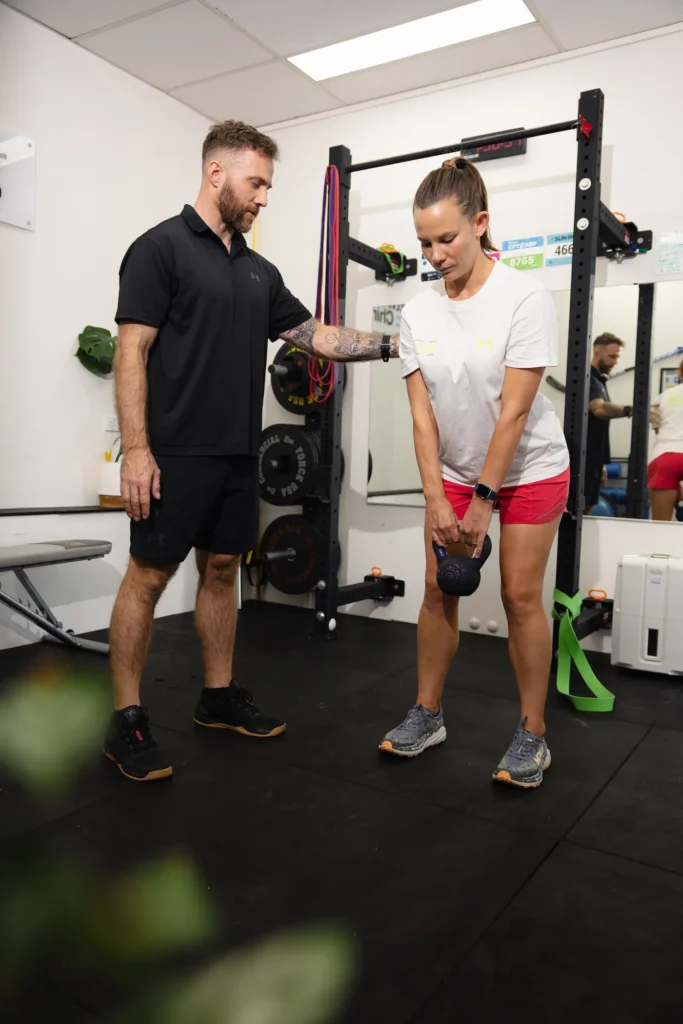
As a chiro, I see firsthand how bone health impacts every aspect of my patients’ lives. With a focus on women’s health, let’s talk about why resistance training isn’t just about building muscle – but about building a foundation for overall health and wellbeing. Bone health and resistance training Here’s something that might surprise you! Your bones aren’t static structures. They’re constantly breaking down and rebuilding themselves in a process called bone remodelling. Think of it as your body’s renovation project that never stops. Every day, old bone tissue is removed and fresh, new bone takes its place. But here’s the catch—this process slows down as we age, particularly for women. After menopause, the decline in estrogen accelerates bone loss, with women losing up to 20% of their bone density in the five to seven years following menopause. This is why osteoporosis affects women four times more often than men. Strength training and menopause When you lift weights, perform resistance exercises, or even do bodyweight movements like push-ups, you’re not just working your muscles. You’re sending a powerful signal to your bones: “We need to be stronger.” This process is called Wolff’s Law—bones adapt to the mechanical stress placed on them. When you create controlled stress through resistance training, your bones respond by becoming denser and stronger. Research shows that women who engage in regular resistance training can increase their bone mineral density by 1-3% annually, while sedentary women typically lose 1-2% per year! Benefits beyond bone density Recent studies have been particularly encouraging about resistance training’s impact on bone health: Postmenopausal women: A 2023 systematic review found that resistance training programs lasting 12-24 months significantly improved bone density at the spine and hip in postmenopausal women. The key was consistency—exercising 2-3 times per week with progressive overload. Younger women: Research shows that building peak bone mass in your 20s and 30s through resistance training creates a “bone bank” that protects you later in life. Women who strength train during these crucial years enter menopause with stronger bones and experience less dramatic bone loss over time. Fracture prevention: Perhaps most importantly, studies demonstrate that women who regularly perform resistance exercises have a 40% lower risk of hip fractures and a 20% lower risk of spine fractures compared to those who don’t. Beyond bone density: the complete picture Resistance training doesn’t just make your bones denser—it creates a comprehensive defence system: Improved balance and coordination: Stronger muscles and better proprioception mean fewer falls. Since 95% of hip fractures result from falls, this protection is invaluable. Better posture: Strong back and core muscles support proper spinal alignment, reducing stress on vertebrae and decreasing the risk of compression fractures. Functional strength: Being able to carry groceries, lift grandchildren, or get up from a chair without strain isn’t just about quality of life—it’s about maintaining independence as you age. Safe exercises for women at every stage You don’t need to become a powerlifter to protect your bones. Here’s what we recommend to our patients: Start simple: Begin with bodyweight exercises like squats, push-ups (wall or modified), and planks. These movements load multiple bones simultaneously and require no equipment. Focus on key areas: Prioritise exercises that target the spine, hips, and wrists—the most common fracture sites. Examples include: Progressive overload: Gradually increase the challenge by adding weight, increasing repetitions, or progressing to more difficult variations. Your bones need to feel challenged to adapt. Consistency over intensity: Two to three sessions per week are more beneficial than sporadic intense workouts. Your bones respond to regular, repeated stress. For the gals Perimenopause and menopause: This is when resistance training becomes even more critical. If you haven’t started yet, there’s no better time than now. Even women in their 70s and 80s can improve bone density through appropriate resistance training. Pregnancy and postpartum: Modified resistance training during pregnancy can help maintain bone health, and resuming training postpartum is crucial for rebuilding bone density that may have been affected by breastfeeding. Hormone health: Regular resistance training can help support healthy hormone levels, including growth hormone and IGF-1, which play important roles in bone formation. Work with your healthcare team As chiropractors, we often see patients who are dealing with the consequences of poor bone health—compression fractures, postural changes, and chronic pain. We wish more people understood that many of these issues are preventable. If you’re new to resistance training, especially if you’re over 50 or have existing health conditions, we recommend: Whether you’re 25 or 75, your bones can still respond positively to resistance training. The earlier you start, the greater your bone bank will be. But even if you’re starting later in life, studies show significant improvements are still possible. Ready to build stronger bones and prevent osteoporosis? Book a consultation with our chiropractors at Pittwater Chiro today.
